
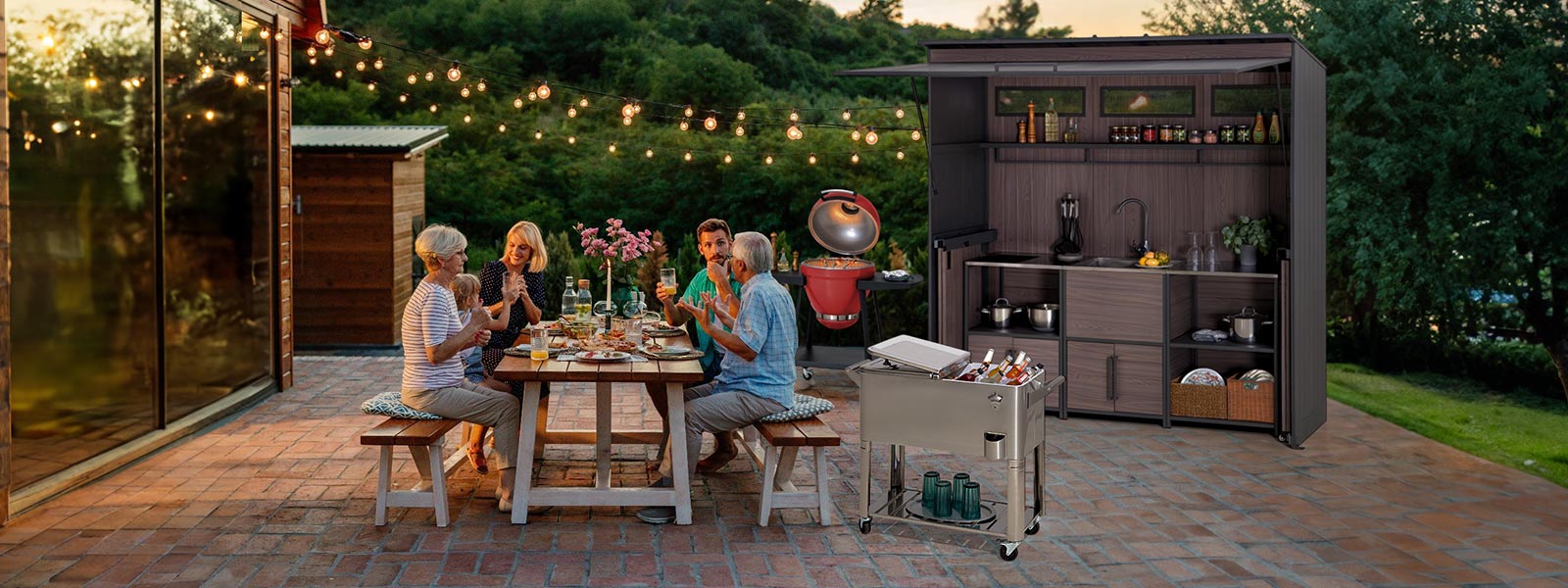
The familiar mishaps that hide behind polished stainless steel
I once watched a brother-in-law wrestle a stainless steel island into a tiny terraced garden at dusk — he swore at the screws and laughed, and the neighbours clapped like it was a play. Outdoor Cooking sits at the heart of so many plans I see; I point clients toward outdoor kitchen kits early on, yet the problems arrive faster than the sausages do on a Sunday afternoon.

I’ve been fitting islands and grills for over 15 years, and I vividly recall installing a twin-burner stainless steel island on a cobbled Rathmines terrace in June 2018 (we finished at midnight; the client paid for extra labour — and then invited us for tea). That job taught me a blunt truth: traditional solutions flatter the eye but falter in use. Manufacturers promise modularity and weatherproofing, but the practical flaws are stubborn — poor ventilation behind a built-in grill, flimsy cabinet vents that trap moisture, and propane lines routed where a kid might trip. The result? Rust under a veneer, warped shelves, burners that misbehave after a wet winter. I once measured a 40% rise in prep time when a cramped layout forced cooks to fetch tools from the kitchen inside — an avoidable drag on any alfresco service. (No harm in being frank.)
Which parts need fixing?
It’s not the idea that’s wrong — it’s the detailing. Weak seals, ill-placed cutouts, and unrealistic assumptions about storage use are the real culprits. I’ve catalogued these through hands-on installs and returns: a smoker tucked beside a grill without heat shielding, a sink with no splash guard, a rot-prone wood shelf marketed as “treated.” Those are the cracks. That history points to a clear next move.
From trenches to blueprints: practical comparisons and the way forward
What’s Next
I shift now to the comparative view with a more technical hat on. When we evaluate new outdoor kitchen kits the questions are precise: how does the stainless steel grade resist coastal corrosion; where are the ventilation channels for the burners and smoker; and can the propane routing be isolated from storage? I compare kits by build spec and by real-world wear I’ve seen across Dublin terraces, coastal cottages, and corporate courtyard installs. For example, a 2019 courtyard fit-out in Dalkey used 304-grade stainless for the fascia and 316 at exposed joints — that detail alone reduced surface corrosion over two winters when others failed.

I’m pragmatic: a compact island that boasts “integrated storage” is useless if it forces cooks to circulate back and forth — that hurts throughput and morale. So I measure kits against three practical metrics (below) when advising wholesale buyers or fit-out teams. We weigh thermal clearance, service access, and material grade — not buzzwords. Short aside — it saves money later. Also, sure thing: light details matter; a clever drip tray or a lockable drawer changes maintenance schedules dramatically.
Advisory: three key evaluation metrics I insist on for any purchase — 1) Material resilience: specify stainless grade and look for reinforced seams; 2) Serviceability: confirm access panels, replaceable burners and clear propane access; 3) Workflow ergonomics: simulate prep and plating routes to avoid transit delays. Measure those, quantify the time saved or rework avoided, and the numbers will talk. I’ve seen a modest up-front spend cut maintenance by half over three seasons. In closing, weigh practicality over prettiness — that’s what keeps a kit working through rain, wind and the occasional football in the garden. Visit my preferred supplier when you need reliable stock: SUNJOY.