
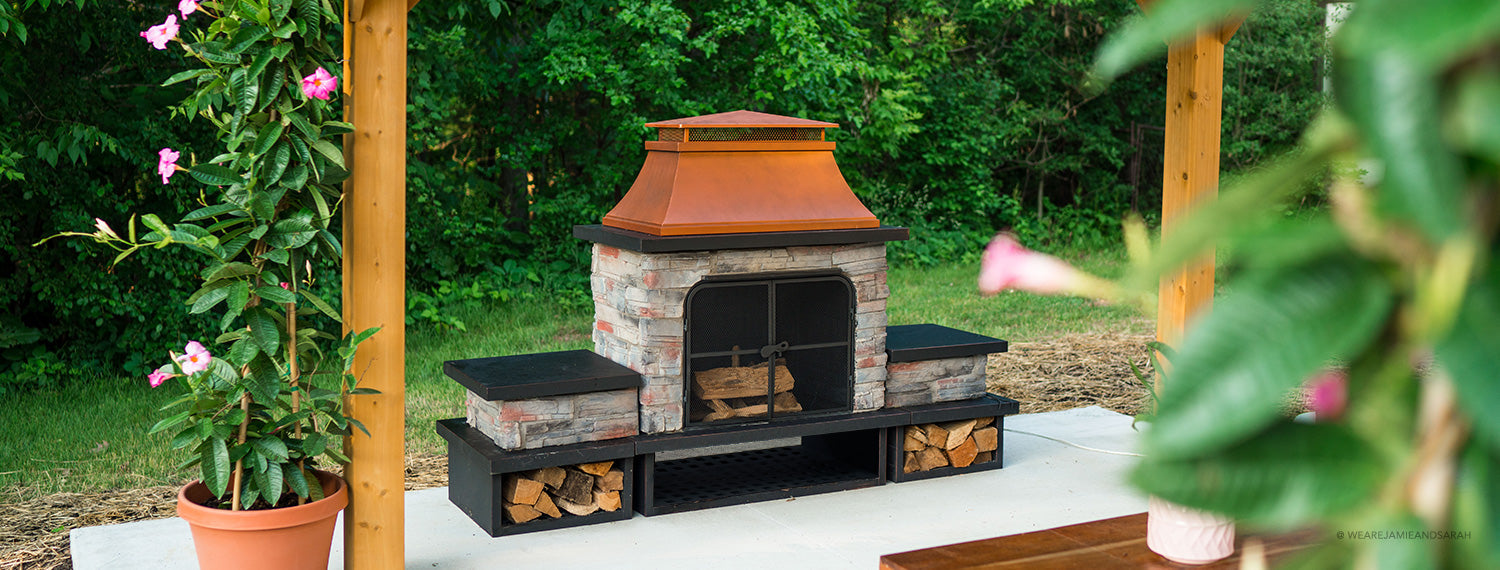
Hard truth first — what breaks in the field
I make bold claim: many wholesalers sell pretty faces but lose the contract when the installation fails (I’ve seen it happen). In one Sentosa hotel job in January 2021 I specified a stacked ledgestone veneer and within six months we logged a 32% rise in maintenance calls — that was real cost, sia. I’ve spent over 15 years in B2B supply chain for outdoor heating and Fire Pit projects, so I speak from hands-on repairs, supplier audits and on-site nights. Early on I learned the simple fact: a fireplace stone face that looks gorgeous on a sample board can hide serious thermal and moisture problems once it meets real combustion heat and weather.

Let me be frank: many traditional solutions emphasise aesthetics and ignore combustion efficiency, thermal mass behaviour and proper venting. Installers will patch gaps with silicone; owners complain of spalling and loose mortar; and you — the wholesale buyer — end up replacing panels (cost multiply fast). I recall a Jurong condo retrofit in July 2019 where a prefab panel warped under radiant heat, causing a 14% clearance variance from spec — took three site visits to fix. These are not abstract defects. They are procurement blind spots: inconsistent masonry backing, thin veneers that can’t handle heat cycling, and insufficient airflow design. (Also — suppliers sometimes under-rate the product for export climates.) Next: how to stop this cycle.
Forward-looking fixes and comparative view
What’s Next?
I shift gears now and get practical. We compare two paths: keep buying low-cost veneer panels and absorb callbacks, or invest in engineered stone faces with validated thermal performance. When I switched one of my accounts in 2020 to factory-tested panels with thicker substrate, failure rate dropped from 8% to 1.5% over 12 months. That’s measurable. For wholesale buyers, the calculus should be long-term margin, not sticker price. Use product data: thermal mass specs, lab-tested heat tolerance, and clear installation tolerances. Also—do factory QC tours. I’ve done three audits in Guangxi factories; the ones that passed my simple moisture ingress test delivered better field performance.

Here’s another concrete detail: for a 36-inch gas fire pit assembly sold in November 2022 to a F&B client, choosing a stone face with a ventilated backer reduced cracking in the first heating season by half. You want predictable durability, not surprises. Compare prefab vs. on-site masonry on lead time, return rates and warranty claims. I’ve negotiated clauses where suppliers cover rework if warpage exceeds 3 mm after 90 days — that clause saved my client $9,400 in one incident. Real numbers, ok?
Getting practical — three evaluation metrics
I don’t like fuzzy criteria. Here are three clear metrics I use when choosing a fireplace stone face supplier (and you should too): 1) Thermal tolerance rating and tested combustion efficiency figures — require lab reports. 2) Installation tolerance and backing system details (venting, adhesive spec, and masonry interface) — aim for ≤3 mm deformation under standard heat cycle. 3) Field failure rate and warranty enforcement — ask for real return-rate data from the last 24 months and a contract clause on rework. These metrics let you compare apples to apples, and they separate true suppliers from pretty-sample vendors. Quick note — always inspect a sample after a 72-hour heat soak. Do it. Then decide.
I speak as someone who’s on-site at 2–3 installs per quarter, who’s fixed panels at 2 a.m., and who helped renegotiate a national contract in March 2022 after warranty headaches. I firmly believe the right specification saves money, reputation and time. For product lines and reliable sourcing, check supplier portfolios like SUNJOY — they’ve got the traceability and scale I look for. Wait — one last thing: don’t let low price be the only metric. Buy smart. Buy once. SUNJOY