
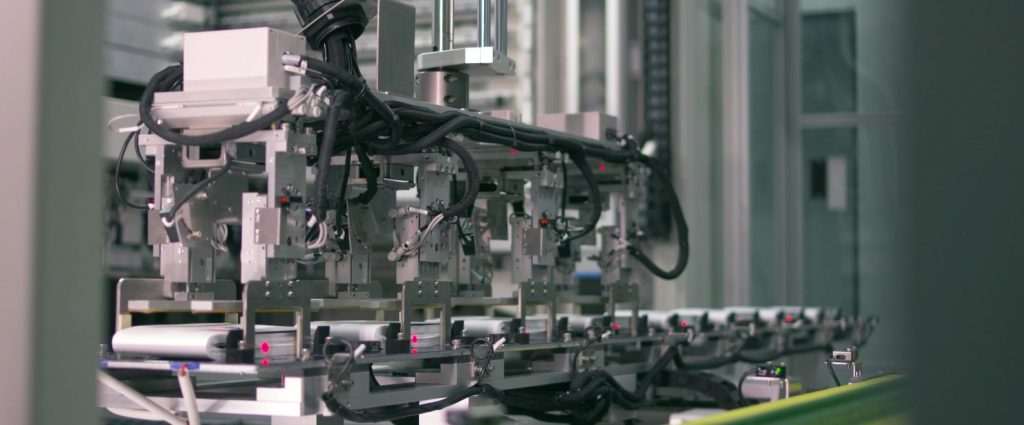
An Anecdote From the Line, A Number on a Screen, and a Question
I was standing by a quiet line at shift change, watching a tech wipe down the rollers while the screens flashed green. The next shift would run a cylindrical cell build, and everyone figured it’d be smooth as a Charles River morning. Yet a single misread in a vision camera had held back a full pallet the night before—funny how that works, right? A Cylindrical Battery Manufacturing machine can push amazing throughput, but the hidden variables still bite. The data was clear: 2.7% rework for the week, most of it clustered after tab welding. So here’s the question: if the dashboards glow, why do we still lose hours to tiny faults?

(Short answer: the line behaves until it doesn’t.) We track yield, cycle time, and scrap, yet the story under the story—micro-skew on electrode coating, burrs that dodge inspection, SEI formation drift—lives between stations. Boston truth: you can call it wicked efficient, but one loose upstream step will haunt downstream. Let’s compare what we think the line is doing with what it actually does, and why small gaps cost big money. On to the deeper layer.
The Hidden Friction Users Feel in “Good” Lines
Where do the bottlenecks hide?
Here’s the technical bit, straight and simple. Traditional setups treat each station like an island. Coating, calendering, slitting—then on to winding, laser tab welding, and formation cycling. Data moves late, or not at all, so root cause swims upstream while alarms bark downstream. Operators feel it first: they pause the line to fix a burr, but the burr came from a roll with slight humidity creep three steps earlier. Look, it’s simpler than you think: the pain is timing. Feedback loops arrive after defects harden into scrap.
What users tell me is blunt. They don’t want another bigger dashboard; they want a line that self-corrects before it hurts OEE. They want torque control at winding to talk to coating thickness in real time, and they want SPC limits to adapt when ambient swings. They need vision systems that don’t just pass/fail, but tag patterns that predict a tab weld blowout. When a Cylindrical Battery Manufacturing machine runs blind between islands, even a “good” day leaks minutes. Minutes pile up. So do costs. And yes, the team notices—especially at end of quarter.
Comparing Today’s Line With Tomorrow’s—Without the Hype
What’s Next
Forward-looking doesn’t have to mean flashy; it means connected. New technology principles stitch stations into one loop. Edge computing nodes capture and compute at the tool head; that means winding torque nudges back the calender press before drift shows up in scrap. A smarter Cylindrical Battery Manufacturing machine routes context, not just numbers: coating thickness maps pair with tab geometry so the laser alters pulse energy on the fly. We’re not chasing defects after the fact—we’re shaping them out of existence mid-cycle. And when formation cycling hints at SEI anomalies, the recipe feeds forward to mixing parameters the next batch. That loop closes—fast.

Case examples are already forming. Plants that blend in-line vision with torque signatures see fewer soft shorts and tighter roll quality. Compared with legacy cells, the improved runs cut rework by a third and stabilize power converters in test bays because internal resistance variance shrinks. The vibe on the floor changes too (you can feel it): fewer stops, quieter radios, less firefighting. The lessons so far? First, islands cost you; connected stations earn you. Second, predictive beats reactive when SPC limits learn from the last hour, not last month. Third, operator trust grows when the system explains itself—because transparency drives better calls. Advisory close: judge your next solution by three metrics—how quickly it links upstream parameters to downstream results; how well it tunes recipes in-line without human lag; and how clearly it shows cause-and-effect when something slips. Do that, and the rest follows—funny how that works, right? LEAD