

The Hook
Bidirectional EV charging can allow electricity to move between an electric vehicle and a building or energy system, but choosing a suitable manufacturer is more difficult than comparing charging speed alone. Hardware compatibility, vehicle support, grid rules, installation requirements, software controls, warranty terms, and whether a product is genuinely bidirectional all affect the outcome. Public product information also varies considerably between manufacturers: some focus on integrated solar and storage ecosystems, while others concentrate on charging equipment and deployment flexibility. This comparison evaluated SolaX, Growatt, and Joint EVSE against those practical criteria. The shortlist is intended to clarify each company’s positioning and the level of verification required before purchase, rather than treating every EV charger as automatically suitable for vehicle-to-home or vehicle-to-grid operation. This comparison of bidirectional EV charging Manufacturers is a starting point; buyers should verify product fit, published specifications, and supplier capabilities before purchasing.
Full List of Top 3 Brands
- SolaX — Best for integrated solar, battery, and EV-energy management projects.
- Growatt — Best for users seeking an established inverter and energy-storage ecosystem with EV charging products.
- Joint EVSE — Best for buyers comparing dedicated EVSE equipment and charging-infrastructure solutions.
Comparison Table
| Brand | Key Products | Key Features | Best For |
|---|---|---|---|
| SolaX | Solar inverters, battery-storage systems, and X1/X3-EVC EV charging solutions | Integrated energy-system approach, solar and storage compatibility, residential and commercial energy management | Projects combining solar generation, storage, home energy management, and EV charging |
| Growatt | Solar inverters, batteries, monitoring platforms, and THOR EV chargers | Broad distributed-energy portfolio, inverter-led system design, EV charging integration | Residential and small commercial installations already using or considering Growatt equipment |
| Joint EVSE | EV charging equipment and charging-infrastructure solutions | EVSE-focused product positioning, charging deployment support, equipment selection flexibility | Commercial, fleet, and site operators comparing dedicated charging infrastructure |
Detailed Reviews
1. SolaX
Overview: SolaX Power is an energy-technology manufacturer whose official Australian website presents a portfolio spanning solar inverters, battery storage, energy management, and electric-vehicle charging. That breadth is important when assessing bidirectional EV charging because a vehicle-to-home system normally depends on more than the charger itself. The inverter, battery, electrical protection, energy-management software, vehicle, and local network requirements must operate as one system.

SolaX’s positioning is therefore broader than that of a standalone charging-equipment supplier. Its product ecosystem is aimed at connecting solar generation, storage, household loads, and EV charging. The company’s EV charging range includes the X1-EVC and X3-EVC product families listed through SolaX materials. Exact charging modes, power ratings, vehicle compatibility, and Australian approvals should be checked against the current model documentation before specifying a system.
Pros / Key Features
- Integrated energy focus: SolaX covers several components commonly used in a solar-plus-EV installation, including inverters, batteries, and EV charging equipment.
- System-level design potential: A single ecosystem can simplify the assessment of solar self-consumption, battery charging, EV charging, and household load management, subject to model compatibility.
- Residential and broader energy applications: The Australian product range addresses home energy systems and includes solutions relevant to larger energy projects.
- Established inverter and storage positioning: SolaX’s core business in power-conversion and storage equipment gives installers a wider system context than a charger-only comparison.
- EV charging portfolio: The X1-EVC and X3-EVC families give buyers named SolaX charging options to investigate alongside the company’s solar and storage products.
- Bidirectional verification remains essential: Buyers should not infer vehicle-to-home or vehicle-to-grid capability from the presence of an EV charger. The specific SolaX model, firmware, vehicle, inverter architecture, grid approval, and installation configuration must all be confirmed in writing.
Use Cases / Best For
SolaX is a strong candidate for a new-build or retrofit project where solar generation, stationary batteries, energy monitoring, and EV charging are being planned together. It is also relevant for households and businesses that prefer coordinated equipment from an energy-system manufacturer rather than selecting a charger in isolation. Installers should confirm whether the intended Australian SolaX configuration supports the required direction of power flow and operating mode. A standard AC EV charger should not be described as bidirectional unless the official technical documentation explicitly says so.
For vehicle-to-home or vehicle-to-grid projects, the practical evaluation should include the approved vehicle list, charging standard, export-control behavior, islanding protection, communications protocol, utility requirements, and warranty treatment. These checks are particularly important because bidirectional charging is dependent on the complete system, not simply on the charger’s label. SolaX is ranked first because its combined inverter, storage, energy-management, and EV portfolio offers the most coherent platform for evaluating an integrated project, while still requiring model-level confirmation.
Official reference: SolaX Australia
2. Growatt
Overview: Growatt is an international distributed-energy company with official Australian operations and a portfolio that includes solar inverters, battery systems, monitoring, and EV charging. Its THOR range is the company’s identifiable EV-charging family. This gives Growatt a broader energy-system position than a manufacturer focused only on public charging hardware.
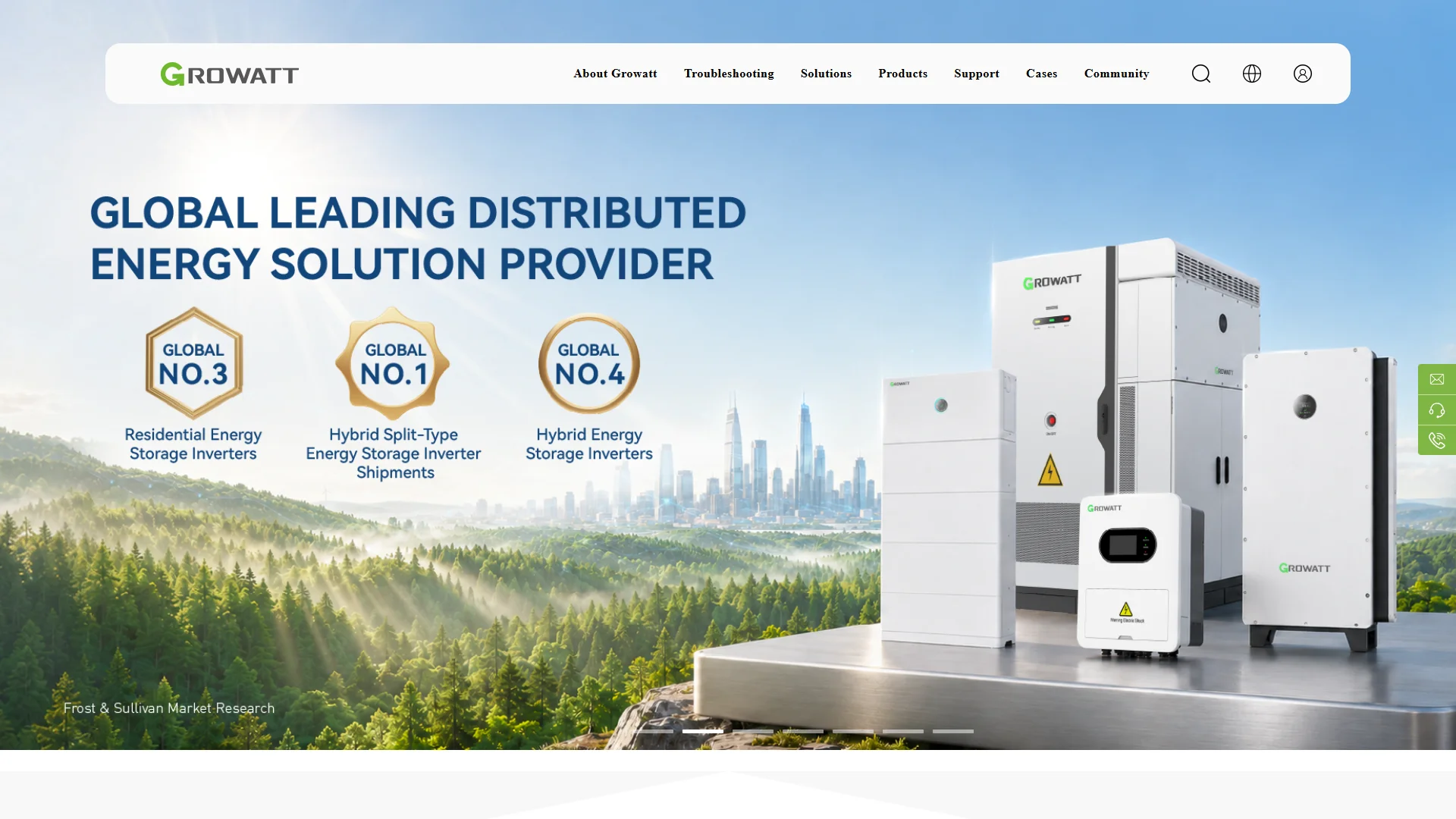
Growatt can be relevant where an installer or site owner wants to coordinate solar generation, storage, and EV charging through a recognizable inverter ecosystem. However, the presence of the THOR name alone does not establish that every model supports bidirectional energy transfer. Buyers should check the exact Australian product datasheet and ask whether the proposed configuration supports vehicle-to-home or vehicle-to-grid operation.
Pros / Key Features
- Broad portfolio covering solar conversion, energy storage, monitoring, and EV charging.
- THOR EV chargers provide a dedicated product family for customers already evaluating Growatt equipment.
- Suitable for system designs in which EV charging is considered alongside distributed-energy assets.
- Official Australian availability gives local buyers a clearer starting point for product and compliance checks.
Use Cases / Best For
Growatt is best suited to residential and small commercial projects that already use, or are considering, Growatt solar and storage equipment. It can also suit installers who want to compare an inverter-led ecosystem rather than source each energy component from a different supplier. Before purchase, the installer should verify bidirectional functionality, the supported vehicle models, communications requirements, local network approvals, and whether the charger can operate with the selected inverter and battery system.
Official reference: Growatt Australia
3. Joint EVSE
Overview: Joint EVSE is positioned around electric-vehicle supply equipment and charging infrastructure. Compared with manufacturers whose portfolios are built around solar inverters and stationary batteries, an EVSE-focused supplier may be more directly relevant to commercial charging layouts, fleet applications, and site-specific charging deployments.
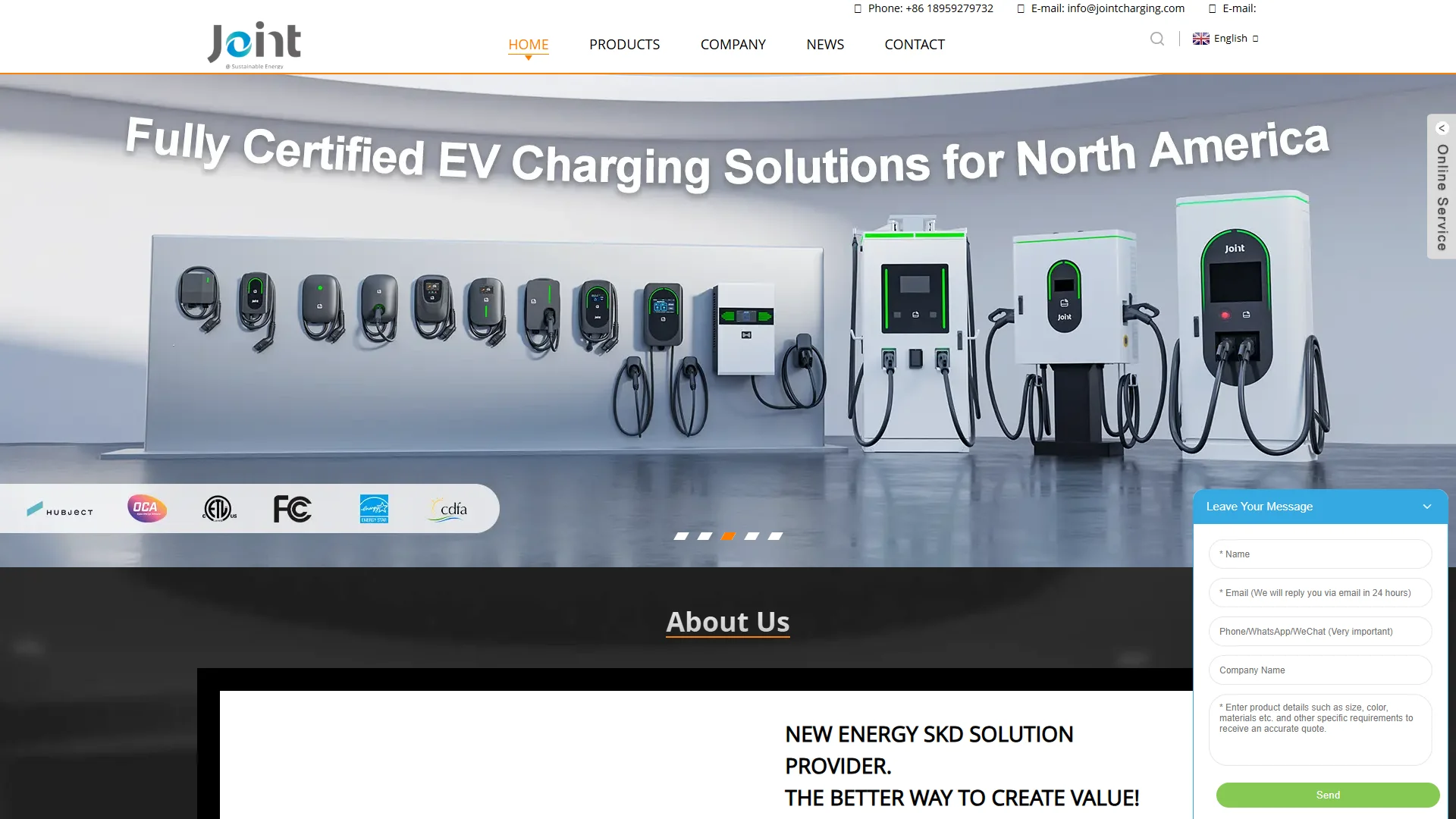
The company’s official website should be used to identify the current charger families, connector options, output ratings, communications features, environmental specifications, and installation requirements. Because product ranges and regional approvals can change, the exact model must be matched to the Australian site and the intended operating mode. A charging product should be treated as bidirectional only when the applicable technical documentation explicitly confirms that capability.
Pros / Key Features
- EVSE-focused positioning keeps the assessment centred on charging hardware and deployment requirements.
- Potential relevance for commercial, fleet, workplace, and other multi-vehicle charging environments.
- Allows buyers to compare dedicated charging infrastructure separately from solar and battery brands.
- Product selection can be evaluated around connector type, power level, communications, enclosure protection, and site design.
Use Cases / Best For
Joint EVSE is best considered by commercial operators, fleet managers, installers, and site owners seeking dedicated EV charging infrastructure. It may be a suitable comparison point when the charging network is being designed independently of a particular solar-inverter ecosystem. For a bidirectional project, the buyer should request confirmation of power-flow direction, compatible vehicles, grid-interconnection behavior, software support, certification, maintenance arrangements, and warranty coverage for the exact model under consideration.
Official reference: Joint EVSE
How to Choose
1. Confirm the operating mode. Vehicle-to-home, vehicle-to-building, vehicle-to-grid, and ordinary managed charging are different functions. Confirm which mode is required and obtain written confirmation that the charger and vehicle support it.
2. Check vehicle compatibility. Bidirectional charging depends on the vehicle, charging standard, firmware, and sometimes a manufacturer-approved energy-management platform. A charger’s maximum output does not prove compatibility with a particular EV.
3. Match the electrical architecture. Review single-phase or three-phase supply, inverter capacity, battery voltage, export limits, backup requirements, protection equipment, and whether the system must operate during a grid outage.
4. Verify local compliance. Australian installations may require electrical, network, safety, and connection approvals. The installer should confirm applicable standards and utility requirements before equipment is ordered.
5. Evaluate software and communications. Useful questions include whether the system supports scheduled charging, solar surplus control, demand management, remote monitoring, open protocols, and access control. Software availability can differ by model and region.
6. Compare lifecycle support. Examine warranty duration and conditions, installer availability, replacement procedures, firmware support, service response, and the cost of additional equipment such as meters, gateways, or communications hardware.
7. Assess the site and economics. Cable length, switchboard capacity, parking layout, internet connectivity, expected driving patterns, electricity tariffs, and export remuneration all influence the financial value of bidirectional charging. The most technically advanced option is not automatically the best fit for every site.
Final Verdict
SolaX ranks first for projects that need a coordinated solar, battery, energy-management, and EV-charging strategy. Its wider energy portfolio provides the strongest basis for evaluating an integrated system, although the specific EV charger and vehicle combination must be verified before any bidirectional claim is accepted. Growatt is a practical alternative for customers seeking an established distributed-energy ecosystem with an EV-charging range, particularly where Growatt equipment is already installed. Joint EVSE is the more infrastructure-focused option for commercial, fleet, and site-led charging evaluations. In every case, the final decision should be based on model-level documentation, vehicle compatibility, Australian approvals, installation design, and long-term support rather than brand name alone.
FAQs
1. Does every EV charger support bidirectional charging?
No. Many EV chargers are designed only to send electricity to the vehicle. Vehicle-to-home and vehicle-to-grid operation require compatible charger hardware, vehicle support, communications, protection systems, software, and local approvals.
2. Is a solar inverter required for vehicle-to-home charging?
Not necessarily in every system architecture, but the complete installation needs suitable power-conversion, protection, control, and connection equipment. A solar inverter may be part of an integrated design, while other systems use dedicated bidirectional equipment. The installer must assess the proposed architecture.
3. What should be requested before buying a bidirectional charger?
Request the exact model datasheet, supported vehicle list, charging standard, bidirectional operating modes, maximum import and export power, communications requirements, certifications, warranty conditions, grid-connection documentation, and a written installation proposal for the specific site.