
Start like a coach: define the win
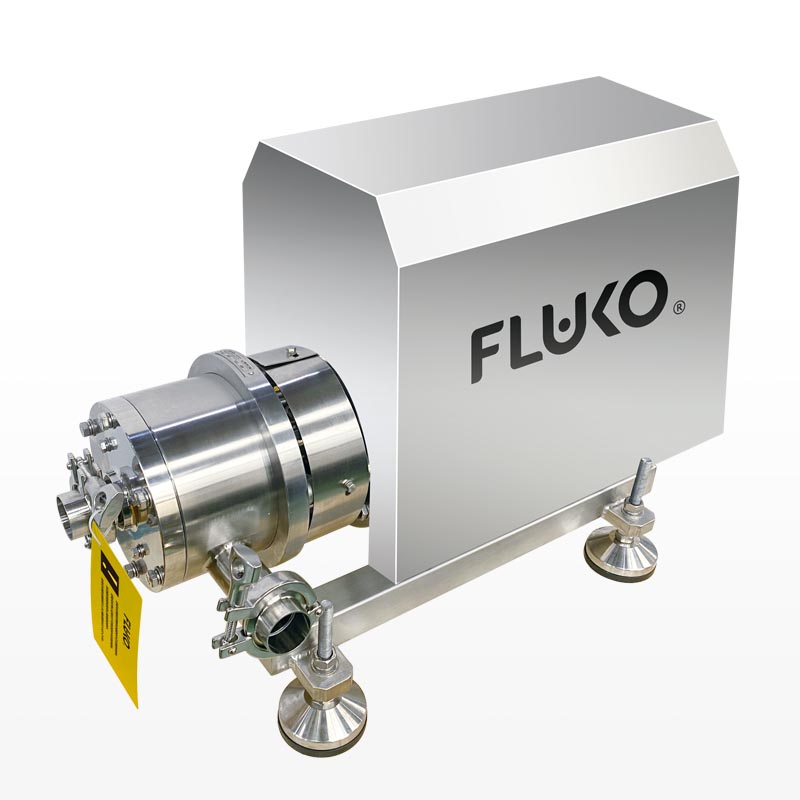
Think of choosing a homogenizer like prepping for a race: know the distance, the terrain, and the gear that keeps you ahead. Compare vendors by what they actually deliver under load, not by glossy specs. If you’re running bench trials, a Laboratory mixer will reveal how supplier claims translate into real dispersion and stability—use that reality to separate talkers from doers.
What to compare — the hard metrics
Push on measurable facts. Rate each supplier on: 1) shear profile (RPM and rotor–stator geometry), 2) flow capacity at target viscosity, 3) reproducibility across runs, 4) material compatibility and finish, and 5) downtime for maintenance. Give numeric scores for each and weight them to your priorities—consistency first, then throughput, then cost. Keep numbers tight. No fluffy prose.
Service and scale — don’t buy blind
Fast service beats low price when production stops. Check lead times for spare parts, local field service presence, remote diagnostics capability, and documented upgrade paths when you scale. Ask for mean time to repair (MTTR) and typical on-site response time. If a supplier can’t give those figures, note it and move on.
Comparative Insight: how to judge test results
Run the same recipe on every candidate. Compare particle size distribution, energy per pass, and stability after 24 and 72 hours. Look for consistent curves, not one-off peaks. Use the same probe, same sample volume, and identical cleaning steps. When one machine needs extra passes to match another, that’s a real cost — count it.
EEAT and a real-world anchor
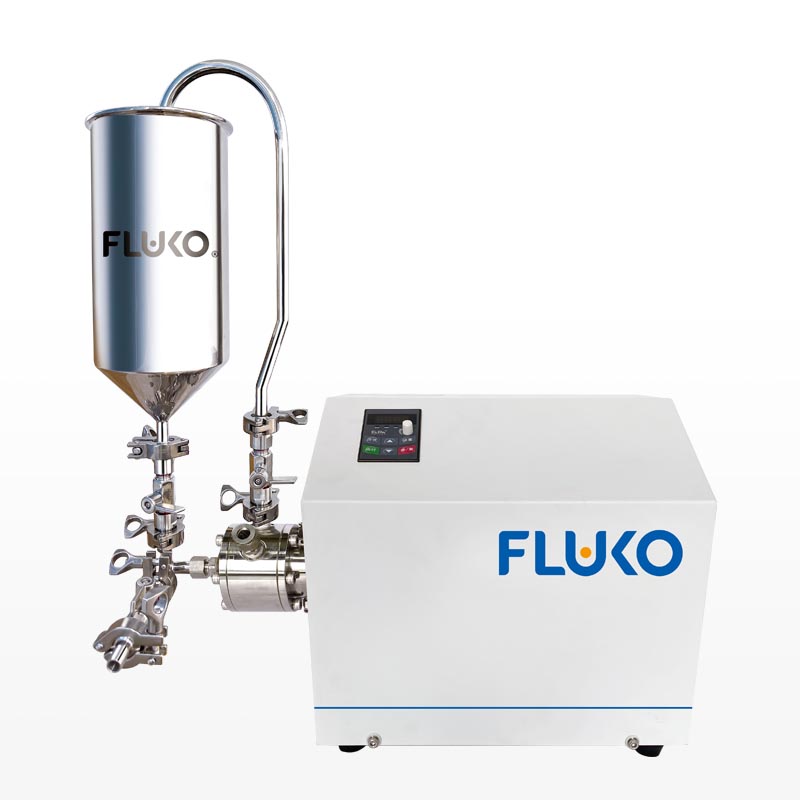
I’ve seen vendors overpromise at industry demos; one reliable benchmark is what shows up at large technical gatherings like Pittcon, where equipment is stress-tested in front of peers. That exposure correlates with documented performance and reproducible methods. For laboratory-scale verification, consider how a laboratory inline dispersing machine performs on identical inputs — the outcomes here speak louder than glossy brochures. Trust vendors who provide raw run data, validation protocols, and third-party test reports.
Common mistakes teams make
Teams often pick the cheapest option, skip cross-vendor trials, or accept vendor-provided test conditions that don’t match production. They overlook flange compatibility, seal materials for solvents, and scale-up factors like shear per pass. Don’t assume a bench result scales linearly; quantify the change and build a correction factor.
Alternatives and when to pick them
If your product tolerates gentle mixing, consider rotor-stator systems for lower energy use. For ultra-fine dispersions, high-pressure homogenizers may outperform high-shear units but cost more to service. If uptime is critical, prioritize modular designs with quick-swap heads. Match the technology to the outcome, not to a brand name.
Checklist you can use immediately
Score each vendor 1–5 on: reproducibility, maintenance speed, spare parts availability, documented validation, and total cost of ownership over three years. Run a one-page summary: score × weight, then pick the top two for side-by-side trials. Keep the process tight and review data within 72 hours of testing.
Finish strong — make the decision count
Decide with evidence. Choose the supplier that delivers consistent runs, clear service metrics, and traceable validation records. That’s how you move from uncertainty to predictable performance, and how operational goals stay within reach—exactly what teams need when they scale from lab to production with tools like FLUKO.