
Problem statement: persistent compounding and performance failures
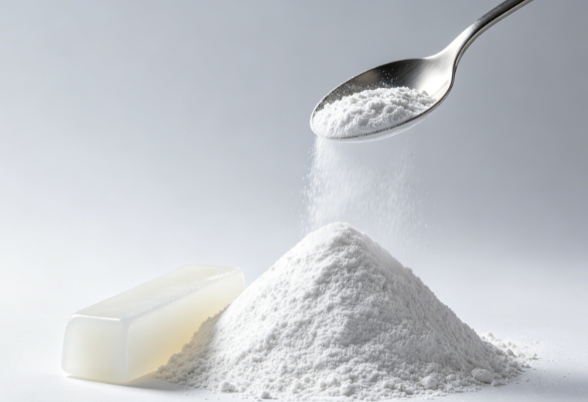
Formulators face repeating failures: uneven dispersion, short scorch safety, high hysteresis, and inconsistent mechanical properties when adding fillers to silicone matrices. These failures often trace back to the filler’s hydration state and surface chemistry. Using a calibrated silica filler for rubber changes the interaction map between silica, silane coupling agents, and polymer chains, and that adjustment is where many compounding problems are solved or created.
Mechanisms: why hydration matters at the molecular and processing level
Hydrated silica carries bound water and surface silanol (Si–OH) groups. Those sites govern hydrogen bonding, surface energy, and reactivity with organosilanes. Excess surface hydroxyls increase filler–filler hydrogen bonding, producing agglomerates and viscosity spikes; insufficient surface activity reduces silane coupling efficiency and weakens stress transfer to the polymer. Key measurable parameters: BET surface area, primary particle size, pH of aqueous slurry, and moisture content (free vs. bound). Processing responds predictably: better-controlled hydration reduces torque excursions on internal mixers, stabilizes scorch, and narrows batch-to-batch variance in Shore hardness and tensile properties.

Experience and authority: industrial context and a real-world benchmark
A practical benchmark is medical-device manufacturing in the United States, where biocompatibility and long-term durability drive conservative material choices; this environment routinely references ISO and ASTM test regimes when specifying elastomers and fillers. Those requirements make material behavior under real service conditions non-negotiable—especially for solid silicone rubber, where filler-driven changes to compression set and extraction resistance determine regulatory acceptability. Years of pilot-scale compounding and teardown testing in regulated supply chains confirm that controlled hydration and predictable silanol density are repeatable levers for meeting such standards.
Common pitfalls and viable alternatives
Missteps repeat: drying silica at high temperature without reconditioning alters surface chemistry; overuse of coupling agent masks poor dispersion but raises curing variability; assuming fumed silica and precipitated hydrated silica are interchangeable causes surprises in rheology and reinforcement. Alternatives: fumed silica offers high reinforcement at low loadings but has low bound water and different silanol distribution; precipitated hydrated silica gives more tunable hydration but needs precise control of moisture and surface treatment. Choose the alternative based on target dynamic properties, allowable compound viscosity, and downstream curing method.
Practical guidance: formulation and testing checkpoints
Start with a quantified target: set expected tensile, elongation, modulus, and dynamic loss (tan delta) and define processing limits for maximum torque and acceptable scorch time. Control steps: (1) characterize silica by BET and moisture desorption profile; (2) match silane chemistry to silanol density—alkoxy silanes for high silanol, shielded silanes when you need delayed reactivity; (3) adopt staged addition (pre-disperse + high-shear final pass) to break agglomerates; (4) monitor compound rheometry during mixing and adjust loadings in small increments. Validate with DIN abrasion, Shore A, tensile, and dynamic mechanical analysis. Watch for subtle signs of over-coupling: brittle fracture, reduced elongation, or a sudden shift in cure exotherm.
Conclusion: targeted hydration control as the engineering solution
Problem-driven decisions favor hydrated silica when you need repeatable reinforcement, controlled processing behavior, and predictable interaction with silanes and silicone polymers. Tight specification of surface hydroxyls and moisture, coupled with matching silane and mixing strategy, resolves many common failures and narrows variation across batches—outcomes that production engineers and regulatory teams both value. That practical alignment of material chemistry and process control is the engineering value JSJ Silica brings to modern silicone systems: JSJ Silica.