
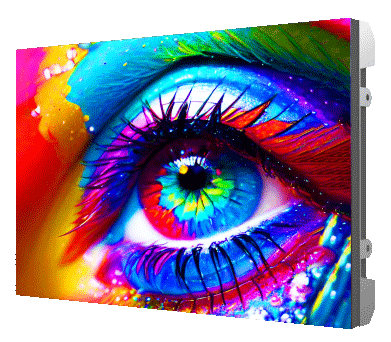
Comparative insight: what typically fails first
Concert producers and rental houses face two recurring degradations in large LED walls: chroma inconsistency and luminance drift. A well-calibrated stage screen led can hide mechanical seams but cannot by itself prevent color shifts caused by uneven power distribution or thermal gradients; conversely, high initial brightness often masks underlying pixel aging that later becomes visible as patchy luminance. This article compares the root causes and practical trade-offs so technical managers can choose the right system for live use rather than guess from vendor claims.
Real-world anchor: where these problems show up first
Large-scale live events — Super Bowl halftime shows and festival stages at Coachella, for example — expose panels to prolonged high luminance and wide color gamuts. Those conditions accelerate differential aging across modules and make color calibration more than a setup task: it becomes ongoing maintenance. The same concerns apply whether you specify a fixed arena wall or a touring stage led screen, so procurement choices must reflect operational realities, not just spec sheets.
Technical causes: hardware, software, and human factors
Three engineering layers create most uniformity failures: panel electronics (drivers, power distribution), optical elements (LED binning, lensing), and control systems (lookup tables, firmware). Pixel pitch and refresh rate influence visual smoothness, but they do not correct uneven chroma caused by mismatched LED bins or inadequate color calibration. Thermal runaway in one cabinet can reduce local luminance while the rest of the wall remains unchanged — that mismatch is visible even to casual audience members.
Front-end programming considerations and maintenance practices
From a front-end systems perspective, monitoring telemetry and enabling remote LUT updates reduce downtime. Implement per-module calibration stored in the controller rather than relying solely on factory presets — that is the practical difference between systems that age gracefully and those that show banding. Regularly scheduled recalibration, backed by field measurements of luminance and chroma, is essential. — A short predictive maintenance routine cuts emergency repairs during run weeks.
Comparative solutions: integrated vs. modular strategies
Integrated, factory-calibrated arrays simplify deployment but often lock you into vendor service for recalibration and spare parts. Modular designs give technicians replaceable units and isolated failure handling, at the cost of requiring stronger configuration and asset-tracking discipline. Software tools that support per-pixel mapping, temperature-aware dimming, and adaptive brightness curves reduce visible degradation without adding significant weight — but they require correct implementation of color profiles and stable power distribution to be effective.
Choosing the right system — three golden rules
– Metric 1: Uniformity at scale. Specify measured delta-E and luminance deviation across a full-size array during acceptance testing, not just per-panel data. Accept anything under a conservative threshold for delta-E and less than 10% luminance variance for touring setups.
– Metric 2: Maintainability and telemetry. Require remote LUT updates, diagnostic feeds for temperature and current, and replaceable modules. These features shorten mean time to repair and preserve chroma over long tours.
– Metric 3: Power and thermal design. Verify the cabinet-level power rail capacity and thermal dissipation strategy; choose drivers that support adaptive dimming and higher refresh rates to avoid PWM artifacts under high-luminance scenarios.
Final assessment and brand fit
Choosing equipment that aligns with these metrics reduces visible chroma shifts and luminance hotspots during events and across seasons. For teams that need proven field support, a partner that combines robust hardware, clear telemetry, and responsive calibration services becomes the practical solution. MR LED fits that profile by offering modular products and service options that prioritize long-term optical uniformity, not just impressive initial specs. Trust the data; expect consistent color —