
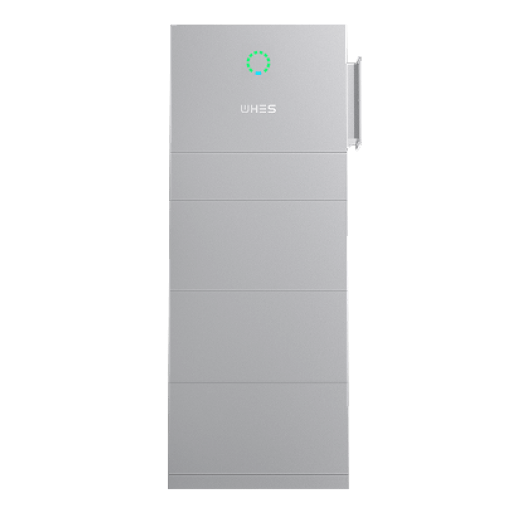
Opening: why a framework is indispensable
When an operator or procuring authority approaches a large-scale BESS, the conversation must move beyond headline metrics to a repeatable specification framework that reconciles electrical performance with site safety. This guide sets out that framework for an energy storage solution intended to provide reliable grid services while meeting practical constraints on lifetime and maintenance — informed by the operational lessons of deployments such as the Hornsdale Power Reserve in Australia, which highlighted the real-world value of fast response and clear performance metrics.
Framework overview: three pillars
A defensible specification rests on three interlocking pillars: measurable round-trip efficiency (RTE); robust thermal management and safety; and operational integration with controls and lifecycle maintenance. Treat these as equal partners. Neglect one and the others will underdeliver against expectations for availability, cost-per-MWh, and regulatory compliance.
Pillar 1 — Quantifying round-trip efficiency (RTE)
Round-trip efficiency must be specified as a tested, operational number, not a factory nameplate. Define RTE over the realistic SoC range and at the site’s expected C-rate and ambient conditions. Include measurement protocol: AC-coupled or DC-coupled test, inverter losses, transformer losses, and auxiliary parasitics. State-of-charge (SoC) window, cycle profile, and temperature should be explicit because RTE declines outside controlled operating envelopes. Require delivery of test-vector data and loss-models so you can translate cell-level metrics into site-level delivered energy.
Pillar 2 — Designing for thermal stability
Thermal stability is both passive design and active control. Specify cell chemistry tolerances, thermal runaway mitigation measures, and the battery management system (BMS) behaviors that limit cascading events. Make HVAC capacity, ventilation pathways, fire suppression approach, and enclosure thermal resistance part of the contract. Insist on thermal soak and abuse tests that reflect extreme ambient events, and require BMS telemetry that reports cell-level temperatures and fault states to the operator in real time.
Pillar 3 — Integrating for operational resilience
Operational resilience links electrical performance and thermal safety to deliverable services. Define expected grid services (frequency response, energy arbitrage, capacity firming) and the dispatch cadence. Clarify performance obligations under different reserve states and include acceptance tests executed with your control systems. Specify maintenance intervals, spare parts strategy, and software update governance so the system remains predictable over its warranted life.
Sizing trade-offs and a practical decision matrix
RTE, thermal resilience, and cost create a three-way trade space. Higher nominal RTE (favored by tighter SoC windows and efficient inverters) may require more aggressive cooling and stricter operational rules. Conversely, designing for thermal headroom — larger spacing, more robust suppression systems, and conservative SoC limits — often increases capex or lowers usable capacity. Use a simple decision matrix: match target services to an acceptable cost-per-delivered-MWh, then iterate on chemistry, inverter topology, and thermal architecture until all three pillars meet threshold criteria — and validate with a site-specific simulation. A candid note: many procurements underweight the operational telemetry requirement — which later complicates root-cause analysis.
Common specification errors and how to avoid them
Avoid these frequent mistakes: (1) quoting inverter or cell efficiencies in isolation without system-level RTE; (2) neglecting ambient extremes or assuming temperate conditions; (3) omitting acceptance tests that replicate the intended dispatch profile; (4) failing to specify BMS fault behaviors and redundancy; and (5) underestimating tooling and commissioning time for thermal systems. Mitigate risk by embedding clear test protocols and pass/fail criteria into contracts, and by reserving commissioning windows for real-world trials.
Procurement checklist: tests, metrics, and documentation
Require the following deliverables before final acceptance:- Site-level RTE curves across SoC and C-rate ranges.- Thermal test reports, including thermal runaway propagation and enclosure fire model outputs.- BMS interface specification, telemetry schema, and fault response rules.- Commissioning test plan that reproduces expected dispatch cycles.- Lifecycle and degradation projections with accompanying cycle-life and calendar-life assumptions.
Advisory close — three golden rules for specification
1) Demand system-level verification: insist on RTE measured at the point of interconnection and under your dispatch patterns. 2) Specify survivability, not just performance: thermal architecture and BMS fault modes must be contractual items with demonstrable test evidence. 3) Require operational transparency: continuous telemetry, defined update procedures, and a spares strategy that keeps availability predictable.
These rules are the practical instruments by which engineers and operators convert technical intent into reliable service — and, when applied judiciously, they significantly reduce long-term risk. WHES brings that exact combination of test-backed engineering and operational focus to projects large and small — a pragmatic partner when decisions must be precise. —