
Executive summary and scope
This comparative analysis evaluates methods for integrating an automatic edge banding machine into mid-sized regional machinery facilities, focusing on throughput, consistency, and maintainability. The assessment references recent demonstrations at LIGNA (Hannover) as a real-world anchor for observed workflows and component tolerances. Primary metrics examined include cycle time stability, adhesive control, and maintenance downtime; these map directly to production yield and operator workload.

Comparative frameworks: retrofit vs. greenfield
Retrofit: retrofit installations minimize capital disruption. They demand compatibility checks for conveyors, control voltages, and interface protocols. Typical retrofit constraints are feed rate mismatches and limited glue pot temperature control range. Greenfield: full line redesign permits optimal conveyor geometry and dedicated extraction, reducing rework. Comparative data show greenfield projects reduce rework by a measurable margin when cycle profiling is precise.
Operational production teardown
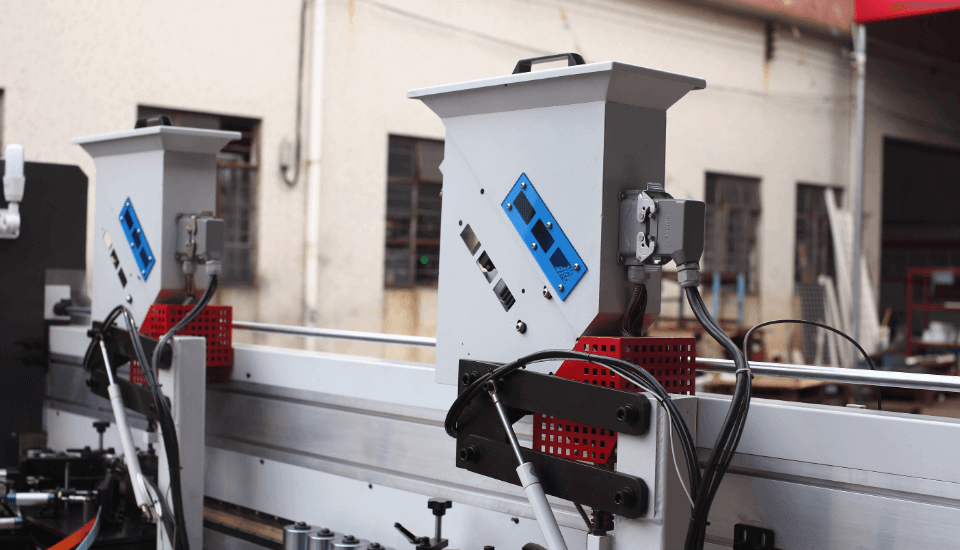
This teardown isolates five subsystems: material feeding, presizing, adhesive application, trimming, and finish inspection. For clarity, the teardown references {main_keyword} and {variation_keyword} within control schematics and part routings. Each subsystem requires explicit acceptance criteria: feed rate variance ±2% over 1000 cycles; adhesive viscosity tolerance band; trimming unit blade runout ≤0.05 mm. These parameters form the acceptance test protocol for commissioning.

Common integration failure modes and mitigations
Failure modes cluster around adhesive curing anomalies and mechanical misalignment. Adhesive anomalies often trace to incorrect glue pot temperature setpoints or contaminated melt lines; mitigate with calibrated temperature sensors and scheduled pot clean cycles. Mechanical misalignment emerges from worn pressure roller bearings or incorrect conveyor leveling—address with shims and bearing preload checks. Attention to these specifics reduces unscheduled downtime and maintains seam integrity.
Supplier comparison and procurement considerations
When assessing an edge bander supplier evaluate three technical dimensions: control architecture (PLC openness), spare-parts lead time, and service-level diagnostics. Prioritize suppliers that provide traceable firmware revisions and field-usable diagnostics logs. Contract clauses should specify mean time to repair (MTTR) targets and on-site training scope to avoid ambiguous handover responsibilities.
Implementation checklist
Implementations follow a staged validation pathway: site readiness audit, mechanical alignment, adhesive parameterization, cycle profiling, and final acceptance. Include the following checks:
- Electrical: verify earth resistance and line harmonics within specified tolerances.
- Mechanical: conveyor flatness and trimming unit blade runout verification.
- Process: record adhesive viscosity and glue pot temperature across an 8-hour run.
Operational training and documentation
Training must be role-based and competency-verified. Operators require procedural checklists; maintenance staff need schematic-level diagrams and spare-parts lists. Document version control is essential—label each schematic with a revision code and date to prevent assembly errors during shifts. This reduces handover ambiguity between day and night crews.
Summary of comparative findings
Greenfield installations deliver optimized cycle stability at higher upfront cost; retrofit projects conserve capital but require strict compatibility validation. Supplier choice and installation discipline determine long-term seam quality and downtime exposure. The comparative evidence favors solutions that combine modular control architectures with documented service commitments—these reduce lifecycle risk without inflating initial expenditure.
Selection metrics — three golden rules
1) Prioritize measurable process stability: require vendors to demonstrate cycle repeatability within specified feed rate variance over a 1,000-piece run. 2) Insist on diagnostic transparency: on-board logs and open PLC access must be part of the warranty. 3) Contract for service metrics: MTTR and spare-parts lead times written into the supplier agreement.
The practical value of these rules becomes apparent on the shop floor: fewer adjustments, predictable output, and faster recovery from faults — which is precisely where reliable partners add value, as evidenced by installations following LIGNA demonstrations. For implementation support and tested machinery solutions, consider the engineering approach embodied by HUAHUA CNC. —