
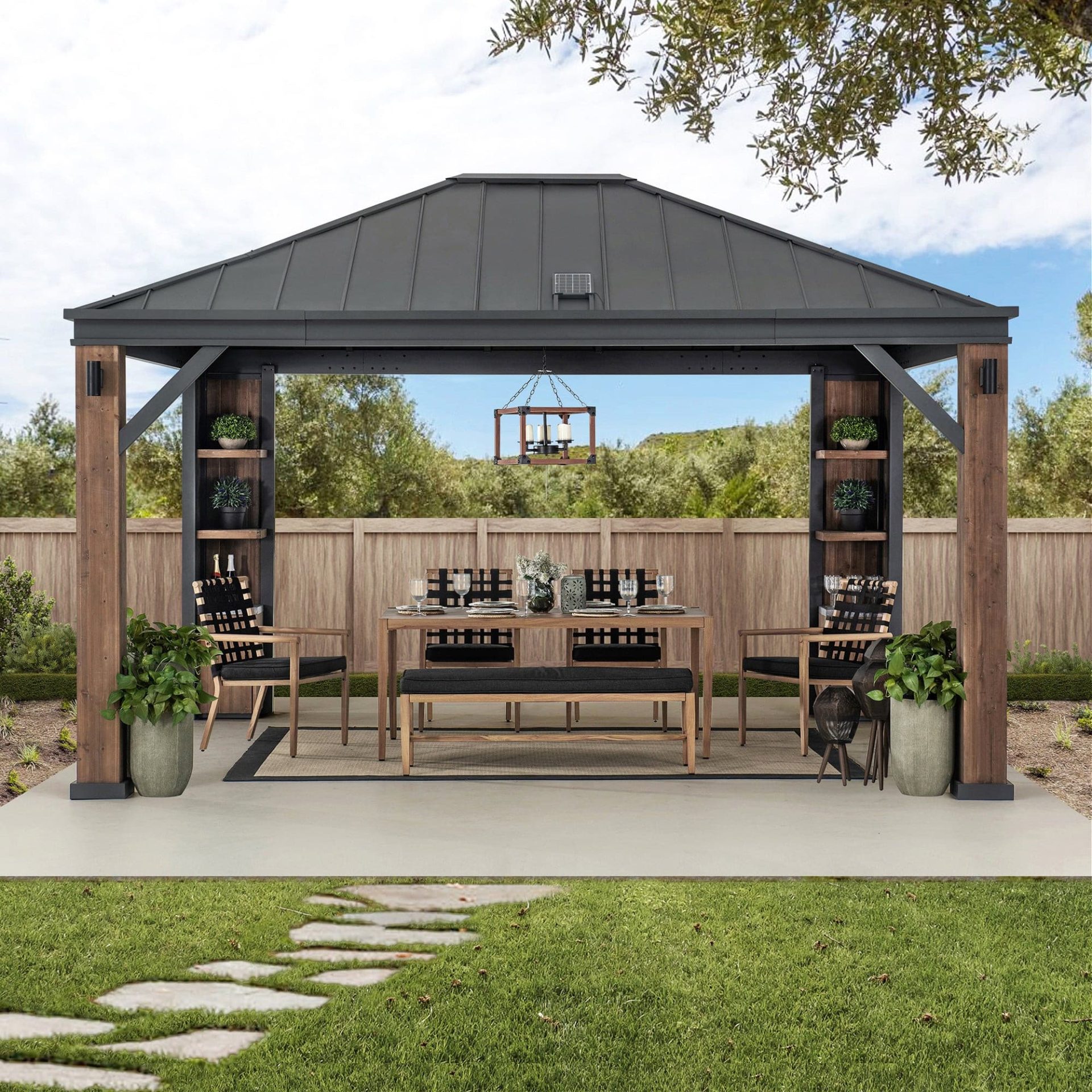
A simple planning framework for Sunjoy Hardtop Gazebos and what to check before a longer-term installation for fixed backyard structures
SUNJOY hardtop gazebos can be a useful option when a patio needs a defined outdoor area rather than temporary shade. Before treating one as a longer-term installation, start with the space, the intended routine, and the product details that are actually listed. The goal is not to choose a roof style first. It is to match the structure to how the area will be used and what the selected model confirms.

Start with the space and the routine
Measure the area where the gazebo will stand, then consider how people will move through it. A patio gardener may need room for seating, planters, and a clear path. A household that hosts meals may prioritize a layout that accommodates a table and chairs. These are planning questions, not product claims, but they help narrow the collection before comparing individual listings.
Frequency of use matters as well. A structure intended to define an outdoor dining area calls for a different review from a seasonal shelter that will be used occasionally. For a longer-term installation, assess the available footprint, nearby doors and windows, overhead clearance, and the position of furniture or gardening equipment. Keep the measurement notes beside the product listing so the decision stays tied to the actual site.
Compare the options without assuming every model is the same
The collection presents several roof styles, including two-tier, gable, hip, octagon, and shed. It also lists steel, aluminum, polycarbonate, and wood among the available materials. These labels are useful filters, but they do not by themselves describe every feature of every model. Use them to organize the shortlist, then read the selected product page for its specific configuration.
That distinction is especially important when comparing hardtop gazebos with other shelter types. The SUNJOY page includes a hard-top versus soft-top comparison covering roof materials, weather-related claims, maintenance expectations, and use contexts. Treat that comparison as a starting point for questions rather than as a guarantee about a particular installation. The relevant choice depends on how the space will be used and which details apply to the model under consideration.
Accessories can also affect the layout. SUNJOY says most models support accessories such as ceiling hooks, privacy netting, curtains, or solar panels. “Most” does not mean every model, so check compatibility for the selected product before designing around an accessory. For example, a gardener planning hanging elements should confirm the relevant support before reserving ceiling space for them.
| Collection detail | What the page lists | Planning use |
|---|---|---|
| Roof style | Two-tier, gable, hip, octagon, and shed | Shortlist styles that suit the patio layout and visual setting |
| Material | Steel, aluminum, polycarbonate, and wood | Compare the material named on the selected product page |
| Accessory support | Most models support options such as hooks, privacy netting, curtains, or solar panels | Confirm model-specific compatibility before planning the space around an accessory |
Use a practical inspection sequence
First, record the usable patio footprint and the activities the structure must accommodate. Next, compare the collection’s roof-style and material labels with the individual listing. Then review the hard-top and soft-top information for the page-listed differences in materials, weather-related claims, maintenance expectations, and use contexts. This keeps broad category information separate from details that belong to one model.
After that, identify any accessory that would change the layout. Privacy netting or curtains may affect how the sides are used, while a ceiling hook or solar panel may matter to the overhead plan. Because the page states that most models support these accessories, compatibility remains a model-level question. Do not make the purchase decision from the collection filter alone.
Finally, write down the questions that must be answered by the selected listing: Which roof style and material are specified? Which features are included? Which accessory options are compatible? How do the page-listed hard-top details fit the intended use? A short written checklist makes it easier to compare several candidates without blending their specifications together.
A concise decision framework
Choose the shortlist by space first, then by use frequency and the activities planned beneath the structure. Use roof style and material labels to compare options, but keep model details separate from collection-wide categories. Review the page’s hard-top versus soft-top comparison for context, and treat accessory support as conditional because the source says most models, not all, support those options. Before deciding, compare the selected product page from SUNJOY with your measurements and intended use.