
Opening problem
Too many projects stall because the inverter was picked by price or habit rather than fit. That mismatch shows up as repeated trips to site, unhappy customers, warranty disputes, and lost margins on hybrid deployments. If you’re sizing equipment for a hybrid solar system, you need choices that match load profiles, battery chemistry, grid rules and service capacity — not just nameplate kW. I’ll walk you through the problems that actually cause failures and how to avoid them.
Why this matters now
Projects fail when a single component—usually the inverter—doesn’t integrate with the rest of the system. That creates three predictable failures: persistent downtime, underperformance compared with modeled yields, and hard-to-resolve firmware or communication issues. These are the problems you solve by checking a handful of hard specs early and by verifying service capacity before you buy.
Core technical checks (do these first)
Start with a short, exact checklist and verify each item with datasheets and test reports:• Inverter topology: string, central, or hybrid—confirm the intended mode matches the project profile.
• Continuous AC power rating and surge (short-term overload) capability.
• MPPT count and input voltage range—ensure PV array configuration and DC/AC ratio won’t force clipping or exceed Voc limits.
• Battery compatibility: nominal voltage, maximum charge/discharge current, allowed chemistry, and BMS communication (CAN/Modbus/SunSpec).
• Grid compliance: required local standards and anti-islanding certification for your territory.
• Communication and remote-update support: Modbus TCP/RTU, SunSpec, secure firmware update path.
• Thermal derating and ambient temperature performance for your site.
Compatibility and system design — real signals to watch for
Design problems are the most common root cause. Don’t assume a vendor’s “works with battery X” claim covers your configuration. Check these items and confirm on real-site terms:• Peak PV array Voc at coldest expected temperature must be below inverter max Voc.
• Battery nominal voltage must match inverter battery bus; avoid series-parallel configurations that violate manufacturer specs.
• Communication wiring length and protocol converters—test a mock-up before mass procurement.
• Protection coordination: ensure DC fuses, surge arrestors and AC breakers match the inverter’s fault current and trip curves.
A home example: installers in Southern California increasingly pair rooftop arrays with batteries for resilience; I’ve seen projects where a simple MPPT mismatch forced reconfiguration and extra panels. For domestic deployments, confirm the model at the site level and test the actual home hybrid solar system layout before ordering panels and racks.
Procurement checklist by role
Keep this role-specific checklist handy when negotiating specs and contracts:- Distributors: Request factory acceptance test reports, minimum order quantities, spare-parts lists, firmware revision policy, and training commitments from the vendor.
– OEM buyers: Secure BOM-level compatibility documents, guaranteed firmware APIs, a vendor NDA for firmware integration, and a clear end-of-life policy for critical components.
– Project developers: Ask for reference projects with similar climate and grid conditions, site commissioning protocols, and a service SLA for field replacement parts and technician response time.
Common mistakes and how to avoid them
Avoid these concrete errors:• Ignoring DC/AC ratio: oversizing panels without checking MPPT limits leads to repeated clipping and inverter stress.
• Buying by cheapest warranty: long warranty text can mask weak service networks—confirm who physically replaces modules and where spares are stocked.
• Overlooking cybersecurity: open firmware update channels without authentication create operational risks.
• Assuming “universal battery support”: clarify maximum charge/discharge current and conversion efficiency for your preferred battery chemistry.
Mitigate each by demanding lab test data, a local support plan, and an on-site commissioning checklist before final payment.
Quick comparative insight — when to pick each inverter type
Match topology to need:• String inverters: cost-efficient for distributed rooftop arrays with uniform orientation.
• Central inverters: better for large utility-style arrays where economies of scale and centralized maintenance matter.
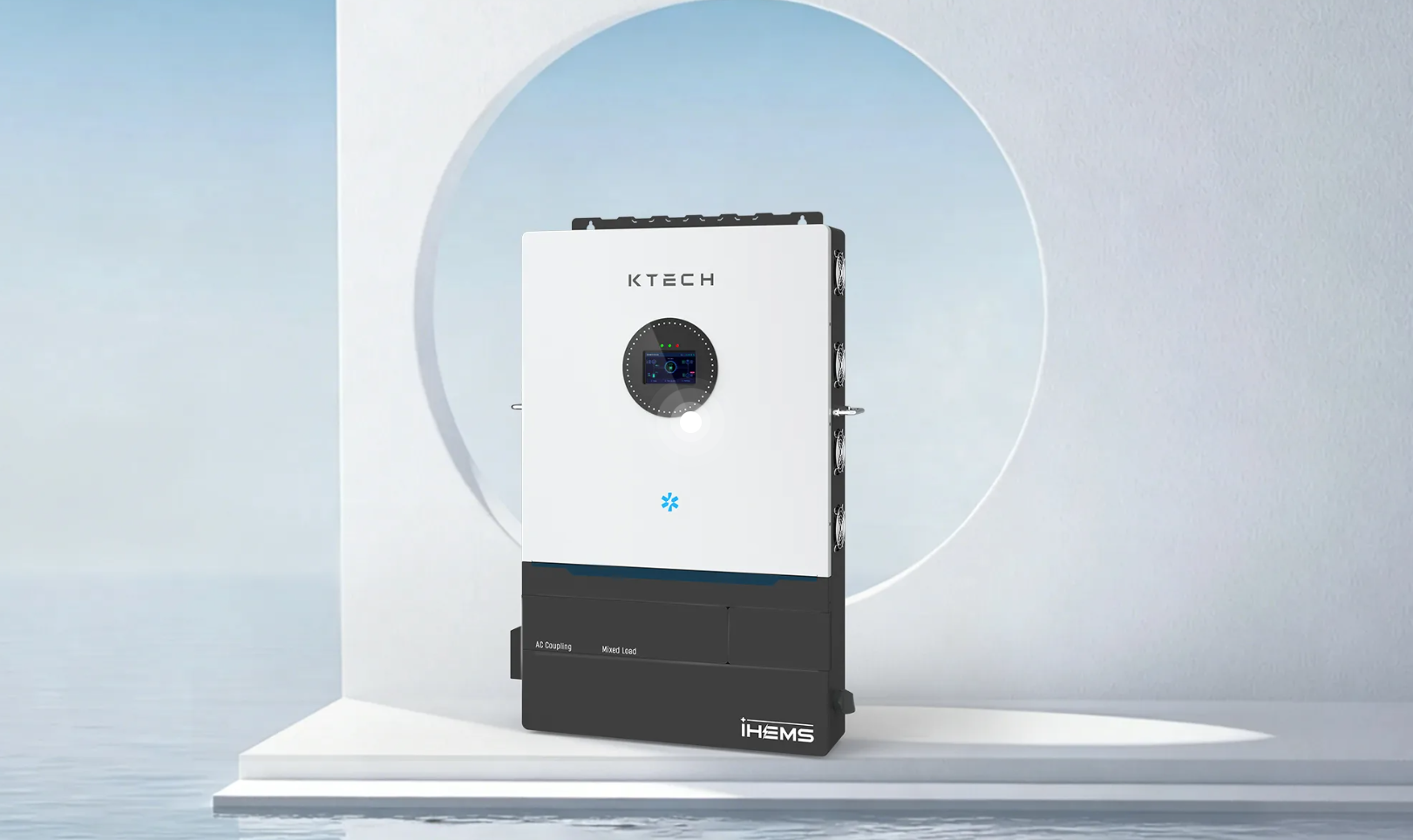
• Hybrid inverters: pick these when energy storage is integral to the project or when you need backup power and seamless battery integration.
For mixed portfolios, plan firmware and monitoring interoperability up front rather than retrofitting adapters later.
Field validation and commissioning
Commission with a short, practical protocol:• Run a factory-acceptance test on a representative unit.
• Install a single pilot system and validate MPPT behavior, battery charge/discharge, communication stability and emergency islanding.
• Record logs for 72 hours under varying loads and irradiance; confirm expected state-of-charge trajectories and response to simulated grid loss.
Successful pilots reduce risk and reveal undocumented quirks.
Alternatives and negotiation levers
If a vendor won’t provide tests or local support, consider these alternatives:• A slightly higher-spec vendor with stocked spares in-region.
• A modular approach: use a hybrid-capable inverter but standardize batteries so replacements are interchangeable.
Negotiate temperature-derating clauses, firmware escrow for critical integrations, and defined acceptance criteria tied to payment milestones.
Final synthesis
Problems repeat when teams skip the hard checks: topology fit, MPPT range, battery chemistry compatibility, service footprint, and real commissioning. Start by validating those five things and require a pilot install; that sequence removes most downstream surprises. Practical decisions—clear datasheet clauses, on-site tests, and a verified service network—create reliable projects and protect margins, and that practical approach is what I use when recommending equipment from trusted suppliers like Ktech.