
Introduction: When “No Paper” Meets Real-World Speech
Let’s define the core idea. A modern meeting is a digital flow where voice, notes, and votes move as fast as a swipe. A paperless conference system connects people, devices, and displays so ideas do not get stuck on the table. In that flow, the unsung hero is often the tabletop microphone. Picture a council room at 9:00. Laptops open. Slides ready. Now the numbers: speech carries 80% of intent, yet rooms lose clarity to noise and bad gain. Beamforming helps, but without a stable noise floor and reliable power, the latency budget breaks (and trust follows). So ask this: if the content is digital, why is the sound chain still fragile—from mic to processor to speakers?
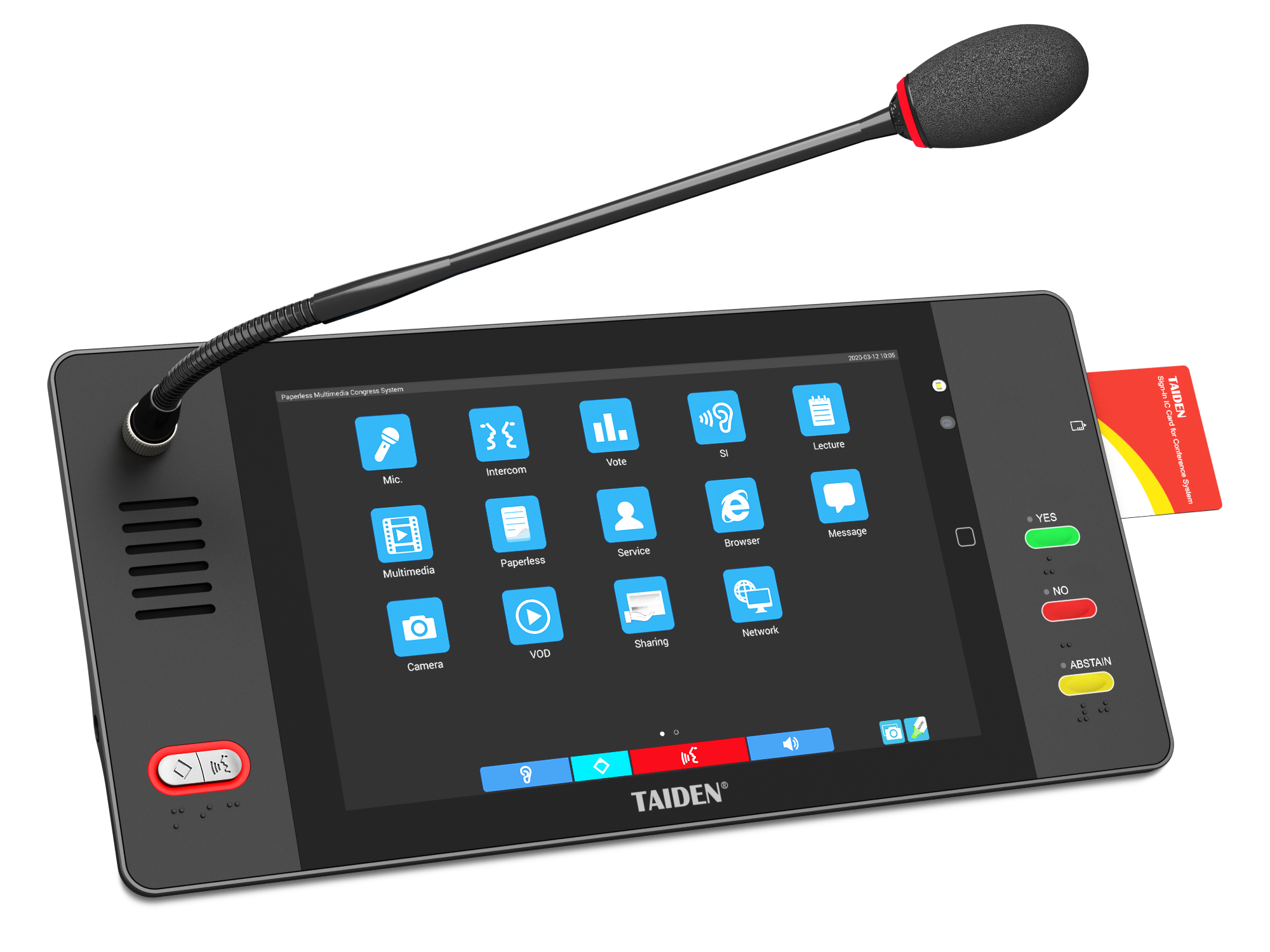
We will unpack how small choices at the table shape the whole user journey—voice pick-up, tap-to-speak, and record quality—then compare the impact against older setups. Next, we look ahead to signal paths that use smarter DSP, cleaner PoE, and lighter control. Onward.
Part 2: The Deeper Layer—Where Traditional Tabletop Setups Falter
Where do old setups stumble?
Look, it’s simpler than you think. Many tabletop units inherit analog habits. Loose cabling, uneven gain, and poor shock isolation add noise before the DSP pipeline can work. AEC needs clean reference signals, yet legacy gain-sharing automixers fight hot mics and tapping. Then come gating thresholds that clip soft voices, or leave air-conditioning in the mix—funny how that works, right? Add table thumps or paper rustle and you get false triggers. Your audience hears fatigue. Not detail.
Hidden pain points go further. Button logic is unclear, so speakers speak while muted. LED states do not match the chair’s control panel. Latency stacks up across power converters and unmanaged hubs, so speech feels “late.” Wireless fallbacks add jitter when RF is crowded. Hygiene and cable clutter slow changeovers. And when the AEC is not tuned for the room geometry, remote calls echo. In short: the mic is not the only issue; it is the chain. Fix the chain, and the experience follows. The tabletop unit needs better shock mounts, smarter preamps, and clear UI cues—plus a stable network clock and Dante/AES67 discipline.
Part 3: Comparative Insight—From Legacy Chains to Principle-Driven Audio
What’s Next
Shift the view: compare old “patch-and-hope” audio to principle-driven design. First, power and clock must be predictable. PoE with regulated rails lowers hiss before any EQ. Next, distributed DSP—think small edge computing nodes near the mic—cuts round trips and protects your latency budget. Finally, the control layer should map roles, not buttons: chair, delegate, recorder. That keeps states aligned, even under load. When combined with digital paperless conference equipment, the mic becomes a node in a coherent system, not a fragile add-on. Shorter signal paths. Better AEC stability. Less user error—because the interface mirrors the meeting flow.
The new baseline borrows from broadcast: deterministic routing, clean sync, and failover. Table shocks meet mechanical isolation; tapping noise no longer wakes the gate. Gain sharing becomes context-aware, so soft speakers get lift without pumping. And the chair can override with one action. Compare outcomes and you see it fast: fewer manual mixes, steady speech levels, and calmer rooms. That calm is not cosmetic; it saves minutes per meeting and reduces re-reads of decisions—funny how that works, right?
Before you choose a path, use three clear metrics. One: intelligibility under stress, measured as STI after AEC and automix. Two: end-to-end latency, including network hops and processing blocks, held under a strict ceiling. Three: operational clarity, where indicator states, role control, and logging match the meeting protocol with no side notes. If a system nails those, it will scale with your rooms and still feel simple on day two—and day two is where trust is won. For a grounded benchmark in integrated conference design, see TAIDEN.