
Introduction
?When a production line stalls for hours, who bears the burden — the operator, the manager, or the machine? In many plants I visit, a single faulty rotor or mismatched controller can cascade into lost hours and lost contracts. The electric motor often sits at the center of that failure chain. Statutorily framed terms aside, the empirical data are stark: plants report downtime losses that range from 3% to over 12% of annual output (depending on sector and compliance demands). Given such figures, I ask: what actionable changes actually reduce loss and raise usable output without shifting liability? My view is pragmatic. I bring field experience and a few hard-won preferences to the table. We will examine concrete differences between common fixes and better tools. Next, I’ll dig into why typical remedies fail — and where you should really look to make gains.

Traditional Solution Flaws and Hidden User Pain Points
I start here with electric motors because they are the locus of most complaints. Too often, teams patch symptoms. They swap bearings, tighten belts, or upgrade to a slightly larger inverter and call it a day. But those steps ignore deeper mismatches: control strategy, thermal limits, and system-level impedance. From my perspective, the result is repeated service calls and fragile fixes. Look, it’s simpler than you think: the hardware can be sound while the control scheme is wrong. Field-oriented control might be absent or improperly tuned. Torque ripple goes unnoticed until a shaft cracks. Those are not cosmetic issues; they are functional liabilities.
What are we missing?
First, many operators underestimate the role of power converters and PWM harmonics. The converter shapes current and can introduce unwanted heat and vibration. Second, back-EMF profiles are seldom profiled post-installation; yet they reveal rotor eccentricity and winding imbalances early. Third, maintenance contracts often focus on parts replacement rather than diagnostic metrics (I’ve pushed for runtime logging and simple edge computing nodes to collect them). Users tell me that documentation is opaque and that OEM readings don’t match field behavior. I sympathize — that frustration is real. In short: common fixes treat symptoms. Real gains require diagnosing system-level mismatches and upgrading control algorithms accordingly — not just parts.
New Technology Principles and Forward-Looking Measures
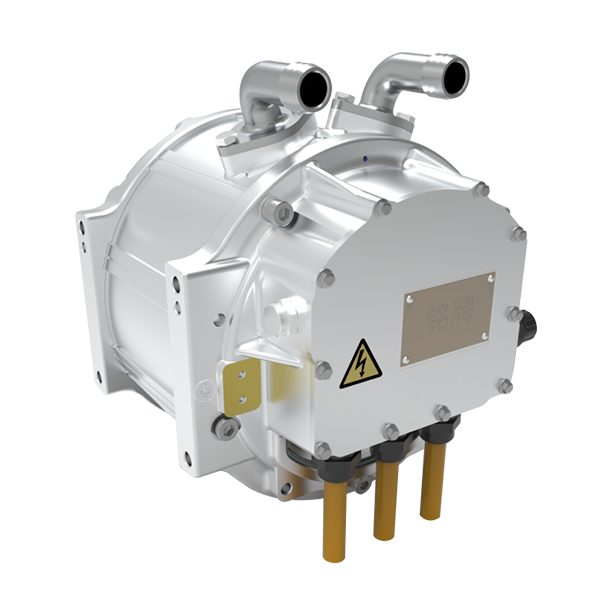
Now let’s move forward. I want to explain the core principles that actually raise sustainable output. Modern approaches pair refined control (field-oriented control, advanced PWM schemes) with smarter sensing. Integrating torque-feedback loops and adaptive thermal models reduces derating and extends duty cycles. For machines where weight and size matter, a correctly tuned pmsm motor delivers superior torque density and lower losses. I say “correctly tuned” because the motor alone is not a panacea. The drive, the control firmware, and the cooling system must all be matched. Otherwise you only shift the bottleneck.
Real-world Impact — What’s Next?
In practice I’ve seen plants adopt sensor fusion — current, vibration, and temperature — and cut unplanned downtime by roughly 30% in one year. They also reduced peak energy draw during startups. That matters to budgets and to compliance windows. Yet adoption takes discipline: you must redesign service contracts, insist on diagnostics access, and retrain staff. Small steps help: implement logged start-up sequences, validate back-EMF curves at installation, and prioritize firmware updates that reduce torque ripple. — funny how that works, right? Finally, when evaluating solutions, I recommend three metrics: steady-state efficiency at rated load, transient torque response (ms-scale), and mean time between failures under duty cycles. Use these to compare options and to set measurable targets.
I’ve learned to be both skeptical and optimistic. I prefer clear data over glossy claims. If you want to explore concrete options, consider proven suppliers and insist on performance logs. I often point teams toward real-world-tested components from reputable manufacturers — they ease integration and lower hidden costs. For reference and vetted product lines, see Santroll (Santroll).