

What are the chief problems buyers face when choosing automation?
Buyers often face three clear problems: unclear technical requirements, hidden integration costs, and uncertain validation paths. Many teams assume a machine solves all variability, but mismatched tolerances and documentation gaps create downtime. Lessons from battery manufacturing automation show that early-stage requirement mapping—defining cycle time, part variability, and traceability fields—prevents expensive rework later.

How do you translate a production problem into vendor requirements?
Start with the error or bottleneck you must remove. Convert that into measurable targets: target cycle time per unit, permitted defect rate per 1,000 parts, and required traceability fields. Use this checklist when talking to suppliers:- Provide a short video or annotated photos of the existing cell or assembly process.- State exact part tolerances and acceptable rejects per batch.- Ask for cycle-time proof from a comparable product run.Vendors who refuse these specifics are not ready to deliver predictable results.
Which technical questions separate capable vendors from the rest?
Ask targeted, technical questions that expose implementation depth:- How does your system handle part variability and orientation errors?- Which sensors and error-detection algorithms are used, and can you show failure cases?- How do you log traceability and link it to batch records?Reliable answers will reference real test runs and show data rather than broad statements about flexibility.
How will the automation integrate with existing lines?
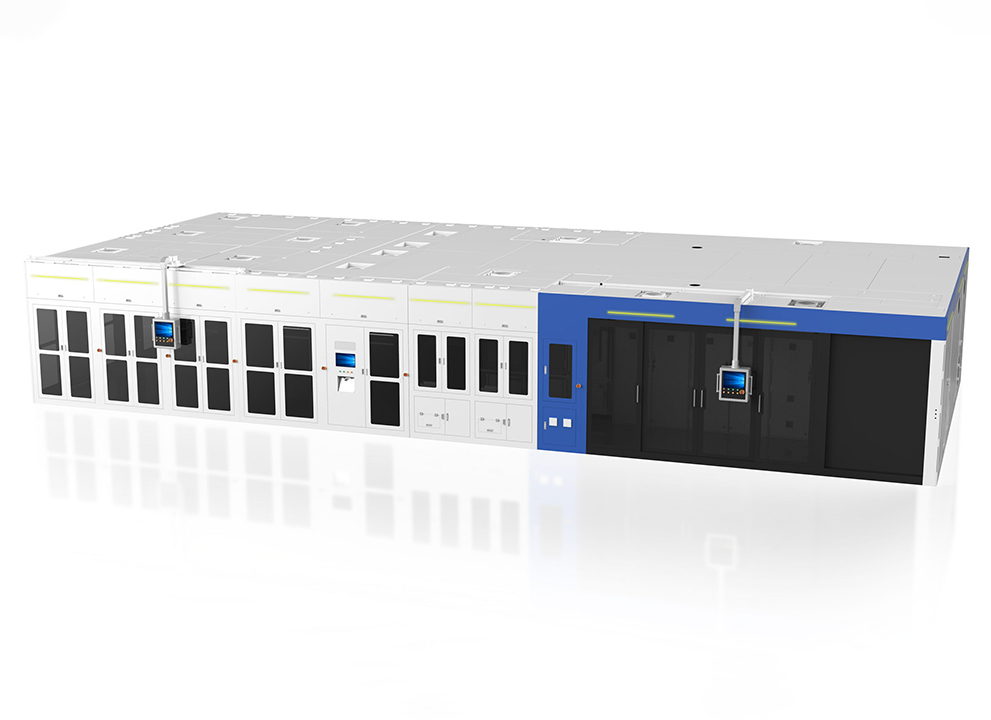
Integration problems cause most schedule slips. Clarify mechanical, electrical, and software interfaces before purchase. Specify PLC or OPC-UA compatibility, belt heights, and footprint constraints. For buyers moving between industries, note that practices from high-volume sites like the Tesla Gigafactory in Nevada highlight the need for standardized interfaces and modular skids. When planning for cell-level handling, study a live battery cell manufacturing line to understand staging, transfer, and cleanroom needs.
What are common technical pitfalls to avoid during commissioning?
Expect these recurring issues and prepare accordingly:- Underestimating fixturing time: custom fixtures take weeks to refine.- Ignoring material flow: conveyors and buffers must match upstream cadence.- Soft validation: rely on production runs for tuning, not bench tests.Plan for iterative tuning windows and reserve spare parts for sensors and actuators.
How should regulatory validation and documentation be handled?
Medical device automation must align with the relevant quality standards. Require traceable software versioning, validation protocols, and a clear change-control process. Demand documented IQ/OQ/PQ procedures and sample protocols that show how the vendor executes them. A vendor that provides complete validation packages reduces your internal validation workload.
What about cost, delivery time, and realistic ROI?
Do not assume the lowest quote equals lowest total cost. Factor in:- Installation and commissioning days on your floor.- Validation and documentation effort.- Spare parts and local service response time.Estimate payback using conservative throughput gains. Fast delivery promises often omit the necessary software tuning period; build realistic buffer time into your schedule.
How to compare vendors side-by-side?
Use a short practical trial as the deciding metric. Ask for a small pilot run on a representative assembly. Score each supplier on:- Measured output during the pilot.- Quality defects under production conditions.- Clarity and completeness of validation documentation.Those objective scores reveal who will support sustained production, not just who sells the flashiest demo.
Where do buyers commonly misjudge capability?
Buyers frequently overvalue modular claims without checking interoperability. They also accept nominal cycle times given in isolated tests rather than measured under real material variability. Verify performance against your worst-case inputs, not the vendor’s ideal sample.
Closing synthesis
The problems you expect—unclear requirements, integration friction, and shaky validation—can be controlled by insisting on measurable targets, pilot runs, and complete documentation. Practical, repeatable decisions win: a clear checklist, an objective pilot, and a vendor who shares validation artifacts. My years reviewing automation projects reinforce that straightforward, evidence-based choices lead to reliable production outcomes, and groups that follow this method often collaborate with partners such as FHS to align design, validation, and delivery without surprises.