
The Problem (Yes, All of It)
Fleet managers buy shiny cameras, slap them on roofs, then act surprised when the footage sparks legal debates, internal fights, and a data mess. An AI dashcam can detect collisions and distracted driving, but raw footage is a liability unless you decide who can see what, when, and why. As someone who’s spent years covering fleet safety tech and watching deployments go sideways, the problem is never the camera — it’s how teams treat video like disposable evidence instead of regulated data.
Why Access Control Isn’t Just “Turn It On”
Access control is often handed to the shortest leash: anyone with a helpdesk login sees everything. That’s bad. You need role-based access, but implemented sensibly: drivers see only their incidents; ops get summaries; compliance gets filtered exports. Encryption at rest and in transit is required, and key management can’t be an Excel sheet. Don’t confuse convenience with control — they’re opposites when privacy is involved.
Privacy: Drivers, Regulators, and the Conversation You’ll Have Anyway
People talk loudly about privacy only after a court filing or a viral clip. Fleet operators at the 2023 Transport Logistic trade fair in Munich heard a lot about on-device masking and consent workflows — and for good reason. Collect only what you need: geofence video capture, blur by default, keep short retention windows for non-safety footage, and document consent steps. Regulators won’t care about your intentions; they want policies and logs.
Common Mistakes Fleets Make (and Regret Immediately)
– Treating firmware updates as optional; that’s how exploits sneak in. – Giving blanket access to “safety team” without auditing; “safety” becomes “snoop.” – Keeping footage forever because “someone might need it”; forever becomes litigation fodder. – Assuming cloud vendors handle privacy; contracts matter — specify encryption, deletion, export controls.
Practical Security Checklist (Yes, Actionable)
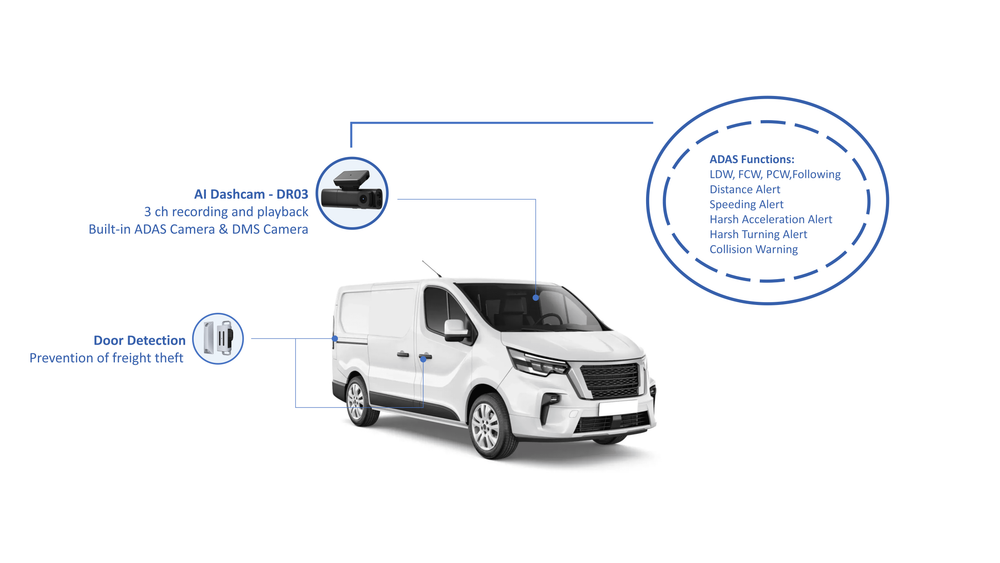
– Device security: secure boot, signed firmware, tamper detection. – Network security: VPNs for uploads, TLS for APIs, segmented traffic for cameras. – Data controls: per-vehicle identifiers, hashed metadata, on-device anonymization options. – Access and auditing: role-based access, MFA for reviewers, immutable audit logs with vendor timestamps. – Retention and deletion: explicit retention schedules, automatic purge for non-incidents, export-only on request. – Incident response: predefined chain of custody for footage, rapid revoke of compromised credentials. If you’re comparing a plain camera to a smarter option, an AI model that flags incidents on-device reduces uploads and limits exposure — consider an dash cam for fleet vehicles that supports these features.
What to Ask Vendors Before You Commit
– Who owns the raw footage and the derived analytics? Ask for contract language. – How is encryption handled and who controls keys? (Not the vendor’s default account.) – How are firmware updates signed and delivered? – Can we mask faces and license plates automatically? – Do you provide auditable logs of every access and export? – What certifications or audits back your security claims? Demand evidence, not buzzwords.
Final Take — Stop Treating Cameras Like Candy
Buying cameras without a security-and-privacy plan guarantees headaches. Done right, video reduces risk and speeds claims handling; done wrong, it creates breaches and PR nightmares. Operators who actually want usable, defensible footage pair strong access controls with practical workflows, which is what seasoned providers like BSJ focus on: sensible controls, clear ownership, and tools that make privacy a feature, not an afterthought.