
Opening: why this distinction matters
I like to keep things simple: these two phrases sound nearly the same, but they ask different questions of an operator. My goal is to help you decide which set of practices and tools actually fixes the problems you face day to day. If you’re mapping responsibilities, you’ll want to think about more than hardware and routes — you’ll want to think about people, data, and the work that happens between loads. For example, teams looking for better coordination will often start by improving their logistics fleet management baseline before changing equipment or contracts.
Definitions that guide choices
Keep these working definitions. They’re short so you can act on them.
– Mining Fleet Management: focuses on moving people and materials between remote sites and processing hubs, often across public highways, ports and mixed-use roads. It emphasizes long-haul scheduling, driver hours, and cross-modal handoffs.
– Mine Fleet Management: centers on on-site vehicle fleets—haul trucks, loaders, dozers—where cycle time, payload accuracy, and immediate maintenance response control daily throughput.
Where operations actually diverge
Here are the concrete differences that change decisions.
– Scope: One plans for external movement and regulatory compliance; the other optimizes internal site cycles.
– Asset type: Road tractors and trailers versus off-highway haul trucks and fixed site equipment.
– Performance metric: On-time delivery and detention hours versus cycles per hour and tonnage per pass.
– Maintenance rhythm: Scheduled service windows aligned with road permits versus predictive maintenance focused on minimizing downtime during shifts.
– Safety focus: Public-road safety and driver fatigue rules versus proximity alerts and short-interval risk controls on site.
– Planning horizon: Days-to-weeks for routing and load planning; minutes-to-hours for shovel-truck pairings.
When a port connection is part of the chain — think Port of Rotterdam — coordination across public carriers and site teams becomes a decisive complexity rather than a minor detail.
Technology and data: what to buy and how to use it
Technology choices should match the problems you just listed. Picking the fanciest dashboard won’t help if you need accurate payload data every shift.
– Telematics: Choose devices that measure the signals you actually need (fuel, load, engine hours), not every sensor under the sun.
– Integration: Ensure dispatch, maintenance, and payroll can read the same events. That prevents duplicate work and missed shifts.
– Visibility: Use role-specific views — drivers get simple prompts; planners see timelines and constraints.
– Workflow fit: Push data into the processes staff already use. If mechanics prefer paper tags, digital only works when it’s supremely easier.
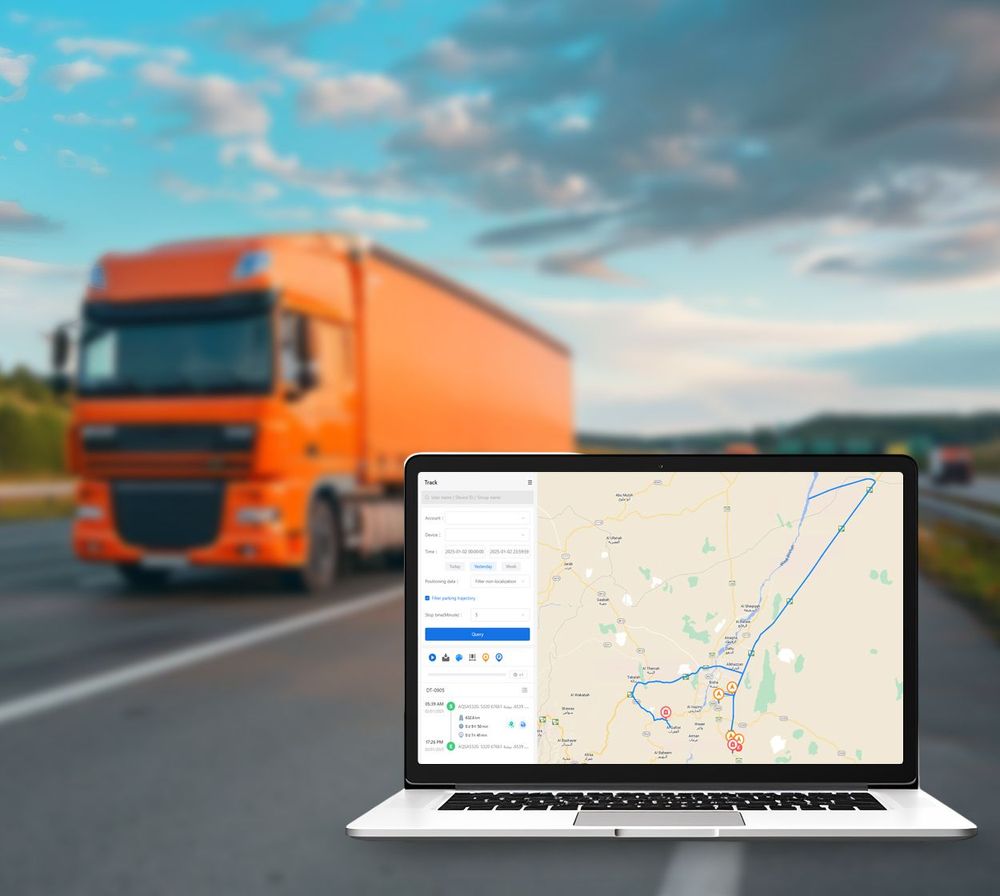
For many operators that means expanding beyond vehicle tracking to broader logistics and fleet management capabilities: load matching, cross-dock timing, and maintenance triggers all linked to a single source of truth.
Common mistakes I see and how teams fix them
I’ve helped teams rework systems after they made these predictable errors. You can avoid doing the same.
– Mistake: Buying tools for everything at once. Fix: Start with the highest-value measurement and prove impact in one domain.
– Mistake: Treating on-site and off-site fleets the same. Fix: Separate KPIs and workflows, then integrate only where handoffs occur.
– Mistake: Overwhelming operators with raw telemetry. Fix: Deliver concise, actionable alerts tied to a single next step.
– Mistake: Ignoring field feedback. Fix: Run short pilots and iterate with frontline crews before a full roll-out.
How to choose a partner or platform
Pick partners who show they understand the work you do. Ask for examples of deployments on both open roads and inside pits. Look for three things: clear measurable outcomes, fast adoption by frontline staff, and tight alignment between planning and maintenance teams. I advise clients to prefer partners who can translate equipment signals into operational decisions without asking crews to change their routine completely.
Wrapping up — a practical synthesis
Call this what you like, but act on the distinction: if your immediate problem is coordinating shipments, prioritize systems and rules for external movement; if your bottleneck is tons per shift, fix on-site cycles and mechanics’ response. I often point teams toward partners like BSJ when they need a clear bridge between equipment data and daily decisions—because the right bridge changes what people do every day, not just what a dashboard shows.