
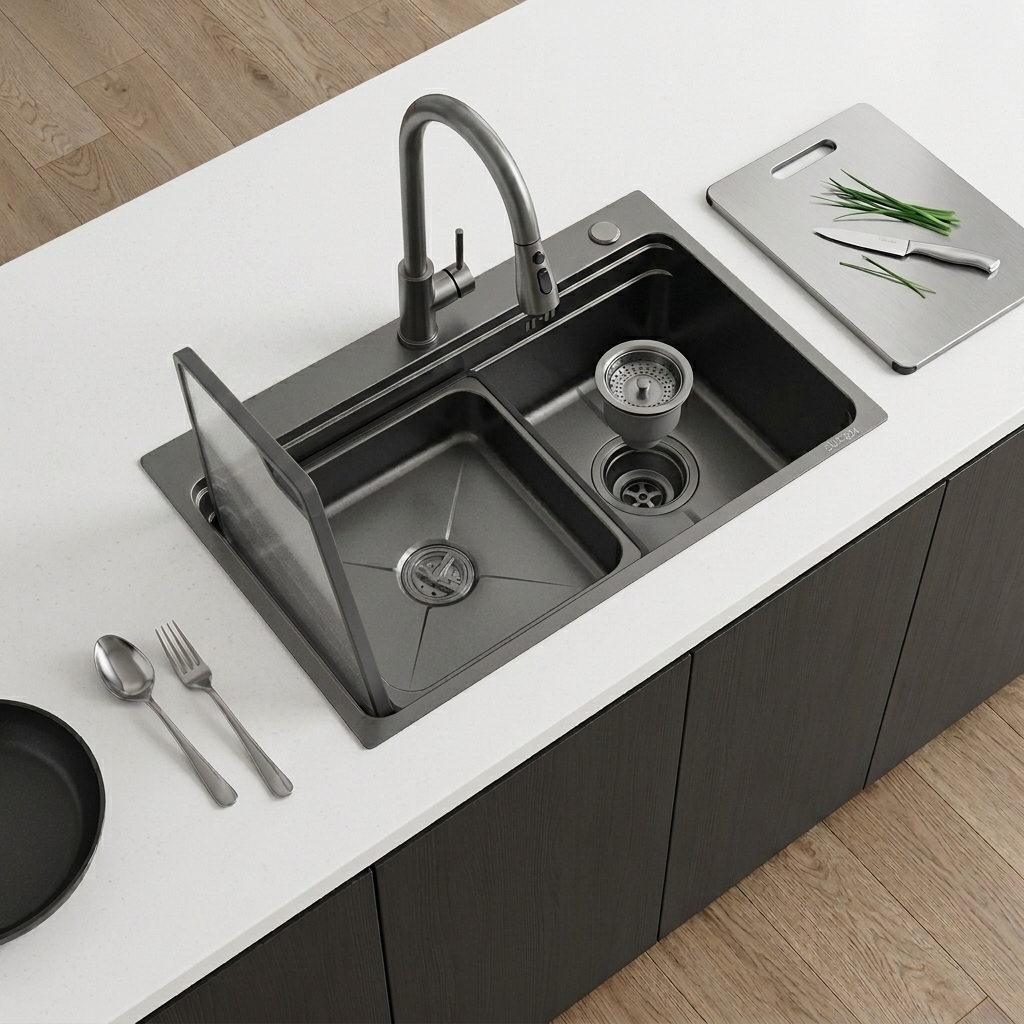
Top-Mount Kitchen Sink Choices: What Questions Actually Steer a Wise Buy?
Opening comparative frame
When choosing a top-mount kitchen sink, the smart starting point is comparative: line up options and ask which practical factors change daily life in the kitchen. Consider how the bowl layout, rim profile and finish alter cleaning, food prep and durability. Check what established kitchen sink manufacturers specify for cutout tolerances and warranty coverage before measuring your countertop; a manufacturer’s recommended tolerances often decide whether installation is tidy or a headache.

What matters most: performance criteria
Compare by concrete criteria: material strength, noise control, scratch resistance, bowl depth and drain placement. Stainless steel varies by gauge—lower numbers mean thicker metal and less flex. Fireclay resists staining and keeps its shape, yet it adds weight and needs robust cabinetry. Composite granite offers heat resistance and colour options but demands specific cleaning routines. Decide which of these wins for your daily tasks, then test for surface slip, water pooling and how easy it is to wipe crumbs to the drain.

Material trade-offs with examples
Stainless steel is forgiving and quick to clean; a 16-gauge sink will hum less and flex less than an 18-gauge. Fireclay takes knocks without obvious marks but chips if struck hard. Composite holds colour but can show oil films unless wiped promptly. Measure not only initial cost but mid-term maintenance: sealing, replacement clips, and gasket conditions. These concrete trade-offs inform whether a cheaper sink becomes expensive after two years of sound-dampening pads and repeated seal repairs.
Installation and compatibility considerations
Top-mount sinks demand accurate cutouts. Account for the countertop material and its thickness—laminate, solid surface and stone all behave differently around the rim. Confirm whether the sink’s rim requires adhesive, mechanical clips or both. Check the rim width against faucet deck space; a wide rim can block small tap placements or soap dispensers. If your countertop has an overhang or tiles near the edge, tape a cardboard template to the cutout to visualise fit before committing to a hole saw.
Experience, expertise and a real-world anchor
I have specified kitchen fittings for hospitality and private projects for more than a decade, advising on durability rather than trendy looks. Attendance at the ISH trade fair in Frankfurt gives perspective on which manufacturers lead in corrosion-resistant finishes and noise reduction; that global show highlights suppliers and testing trends that installers rely on. For direct procurement and technical sheets, consult reputable sink suppliers to confirm cutout templates, mounting kits and certification for commercial use.
Common mistakes to avoid
Do not assume ‘standard’ dimensions—measure twice, check the template. Ignore sound-dampening claims at your peril: many sinks require adhesive pads that the installer must apply correctly. Overlooking the slope to the drain causes water pooling near rear corners. Using the wrong sealant for stainless junctions invites rust and discolouration. Buy a model with accessible warranty terms and confirm what counts as user damage versus factory fault.
Comparative shortlist and realistic alternatives
If you want low maintenance and a muted sound profile, pick a thicker stainless steel with factory-applied dampening. Choose fireclay for a traditional, scuff-resistant surface if your cabinetry can bear the weight. Composite is the middle ground: attractive and warm underfoot but needs disciplined cleaning. If a top-mount rim spoils your countertop lines, consider an undermount as an alternative; it alters installation needs and often raises labour costs, so weigh that against the aesthetic gain.
Synthesis and practical next step
Compare what you use the sink for against finish, bowl layout and installation demands, then match that list to suppliers who publish precise templates and performance data. A measured choice reduces callbacks and keeps the kitchen working day to day—the kind of result one finds when specification meets reliable supply, as shown by makers and distributors such as AOGLAN.