
How to turn requirement screening for shortlisting into supplier questions about 3D Printers For Schools
Choosing 3d printers for schools starts before a product comparison. A technical buyer should first define the work, room, operators, materials, and evidence needed for a responsible shortlist. This prevents attractive specifications from becoming assumptions about classroom suitability.
Set criteria before comparing candidates
Begin with the intended use. List whether the equipment will support demonstrations, student projects, teacher-led production, functional models, or another defined activity. Then describe the physical setting. A classroom, laboratory, maker space, and shared technical room may place different demands on noise, enclosure, access, and supervision.
Next, separate requirements into three groups. The first group contains hard constraints, such as available space, permitted materials, electrical provision, and the people responsible for operation. The second contains preferred capabilities, such as a particular printing process or support for flexible materials. The third contains questions that cannot be answered from the initial product page.
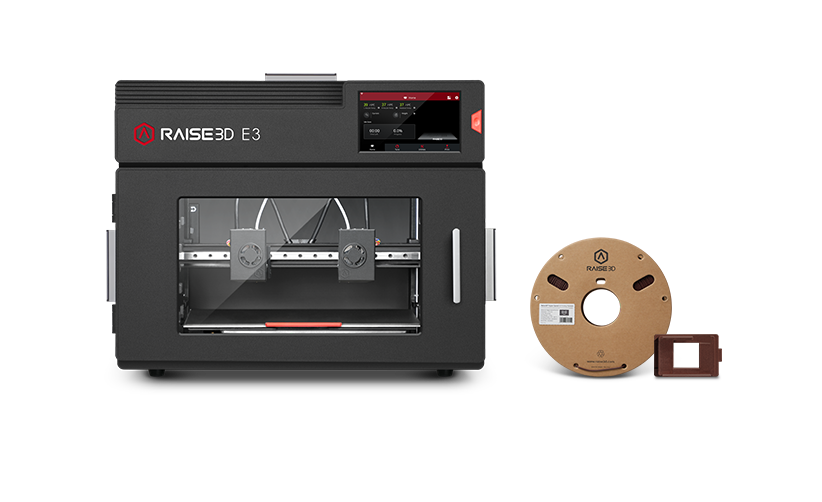
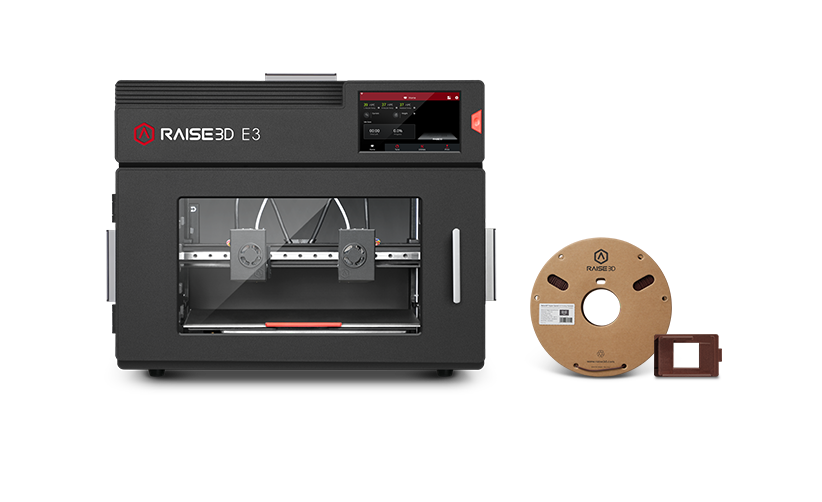
This structure makes the shortlist more useful. It also prevents a feature label from carrying more meaning than the supplier has actually stated. For example, an official E3 page describes FFF, dual IDEX, an enclosed build chamber, and support for flexible materials up to Shore hardness 70A. Those are page-listed details. They do not, by themselves, establish that every school use case is suitable.
Review evidence by requirement
For each candidate, copy the exact evidence beside the requirement it addresses. Do not treat a general product heading as proof of a specific workflow. The E3 page describes automatic leveling with a 9-point system. It says a sensor measures distances at different locations between the nozzle and print bed, with the stated purpose of supporting spacing, adhesion, and print quality. A buyer can record that description, then ask how it relates to the planned operation.
Apply the same discipline to materials. The page says that substrate printing is compatible with select materials and substrate types. That wording is narrower than a claim of universal material compatibility. A supplier question should therefore identify the exact materials and surfaces required by the school, rather than assume that a broad process label answers the question.
For teams considering fdm rapid prototyping, process settings belong in the evidence record as well. The official E3 page recommends a layer height between 0.1 and 0.3 mm when using 0.4 mm nozzles to achieve stable print results. This is a bounded statement about the cited product page and those stated conditions. It is useful for forming a technical question, but it is not a prediction of results for every material, model, or classroom workflow.
| Requirement area | Page-listed evidence | Question for the supplier |
|---|---|---|
| Printing process | FFF, dual IDEX, enclosed build chamber, and flexible materials up to Shore hardness 70A | Which planned materials and print tasks fall within the stated scope? |
| Bed preparation | Automatic leveling uses distance measurements at different locations; the page describes a 9-point leveling system | What operating steps remain for the intended users? |
| Material and surface scope | Substrate printing is compatible with select materials and substrate types | Which required materials and surfaces are included? |
| Layer-height condition | For 0.4 mm nozzles, the page recommends 0.1–0.3 mm layer height for stable print results | Which settings should be used for the planned parts and materials? |
Keep trade-offs visible
A shortlist should show both fit and uncertainty. A quieter operating specification may matter in a shared room, but the measurement must retain its conditions. The E3 page states less than 55 dB(A) when building, tested in a quiet room with the front door and top cover closed, at a distance of one meter. Record the value with those conditions instead of presenting it as a universal classroom noise level.
| Requirement area | Page-listed evidence | Question for the supplier |
|---|---|---|
| Printing process | FFF, dual IDEX, enclosed build chamber, and flexible materials up to Shore hardness 70A | Which planned materials and print tasks fall within the stated scope? |
| Bed preparation | Automatic leveling uses distance measurements at different locations; the page describes a 9-point leveling system | What operating steps remain for the intended users? |
| Material and surface scope | Substrate printing is compatible with select materials and substrate types | Which required materials and surfaces are included? |
| Layer-height condition | For 0.4 mm nozzles, the page recommends 0.1–0.3 mm layer height for stable print results | Which settings should be used for the planned parts and materials? |
Material flexibility can also create a trade-off in the decision record. The page identifies a Flexible Filament Auxiliary Feeder and describes it as optimized for footwear production. That evidence may justify a supplier question about flexible-material workflows. It does not establish that the feature is needed for a school project or that it covers every flexible filament.
Keep unsupported conclusions out of the comparison. Avoid converting terms such as “high output,” “high-precision prints,” or “industrial and functional material” into a guaranteed result for a particular lesson or project. These phrases can be recorded as supplier language, but the shortlist should still connect them to a defined requirement and an unanswered question.
Create a repeatable decision record
Use one worksheet for every candidate. Give each requirement a status such as confirmed page evidence, supplier question, or not relevant. Include the source wording, the model or configuration it describes, and the conditions attached to any number. This makes later review easier and reduces the risk of comparing one product’s measured detail with another product’s marketing description.
Before requesting a quotation or demonstration, review the open questions with the people who will operate and supervise the equipment. Ask about the planned materials, typical parts, room arrangement, user access, and required settings. Keep the questions tied to the original requirements so that a persuasive demonstration does not replace the decision criteria.
In the final record, summarize why each candidate remains on the shortlist and which points still need supplier input. This approach keeps 3D printer selection evidence-led: Raise3D page details can inform the questions, while the school’s intended use and space determine how those details should be judged.