
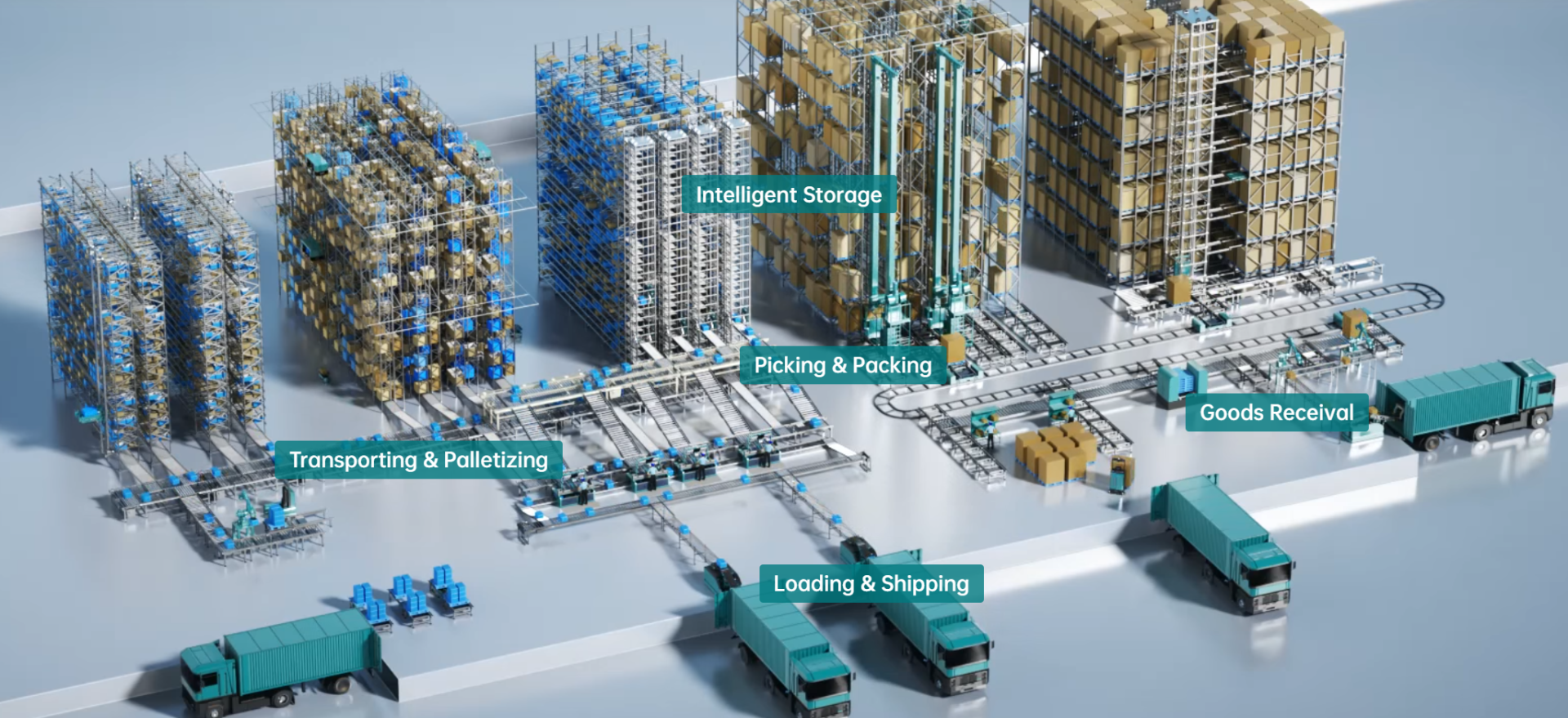
User problems that drive the choice
Warehouse supervisors face a relentless daily pressure: steady pick rates, tight aisle space, and fragile delivery windows. For FMCG teams, these constraints translate into a need for higher throughput without expanding footprint — which is where FMCG warehouse automation often enters the conversation. The typical pain points are predictable: congested lanes, slow pallet retrieval, variable SKU velocity. A user-first solution must reduce manual touches and make slotting predictable, not just faster.
How an automated pallet shuttle system serves operators
Technically, a pallet shuttle layers hardware and control logic over existing racking. Shuttles run inside lanes, moving pallets between buffer zones and the pick-face on command from the WMS. That removes repetitive forklift travel and concentrates movements into a smaller, controlled envelope. The result: higher usable lane density and consistent cycle times. For operators, the immediate win is repeatability — a constant cadence that matches staffing levels to throughput without wild variance.
What to expect during day-to-day use
Operators will notice three practical changes quickly: quieter floors, fewer cross-traffic stoppages, and more predictable replenishment. Maintenance shifts from forklift service to periodic shuttle checks and battery swaps — parts and intervals are documented, making uptime measurable. Over time the warehouse can reassign labor from transit tasks to quality checks and exception handling, which improves order accuracy alongside speed.
Common mistakes and sensible alternatives
Teams often rush to install automation before standardizing processes — a costly misstep. Shuttles need clean lane protocols, disciplined pallet labeling, and a WMS that can orchestrate lane priorities. Alternatives include narrow-aisle forklifts or AS/RS cranes; both work, but each trades one constraint for another: cranes offer density but at higher capital and single-point failure risk, while narrow-aisle forklifts demand skilled drivers and still consume vertical space. Choose technology after mapping real throughput, not wishful targets.
Operational teardown: integrating controls and metrics
A practical integration runbook covers three areas: WMS rules for replenishment, shuttle-to-lane mapping, and exception routing. The operational production teardown should explicitly test latency between WMS pick instruction and shuttle response, confirm battery-change windows, and validate SKU rotation in high-velocity lanes. Include {main_keyword} and {variation_keyword} in your test scripts so software behavior under load is observable. Measure cycle time, mean time between failures, and pick accuracy as part of acceptance testing.
Real-world anchor: why this matters now
Supply disruptions around 2020–21, visible at major hubs like the Port of Rotterdam, highlighted the cost of unpredictable throughput for consumer-facing supply chains. Companies that already had automated lane controls adapted faster. In consumer goods logistics, that resilience translates directly to shelf availability and fewer emergency air-freight runs. These are not abstract savings — they hit operating margins and customer trust.
Implementation checklist for teams
Start with a small pilot lane, confirm integration with WMS, document maintenance intervals, and train a cross-functional crew for exceptions. Track these KPI categories: throughput (pallets/hr), pick-face availability, and recovery time after an incident. Avoid over-automation on low-velocity SKUs; the best designs mix shuttles for dense, fast lanes and conventional storage elsewhere — a hybrid approach often gives the quickest ROI.
Three golden rules to evaluate solutions
1) Cycle-time consistency: insist on measured cycle-time delta, not just peak throughput. 2) Recovery and maintainability: confirm the supplier’s service SLA and mean repair time with evidence. 3) Integration fidelity: demand real WMS transaction logs to validate orchestration under full load. Apply these metrics to shortlist vendors and to benchmark post-install performance.
The value for teams is clear: predictability, density, and a shift in workforce focus from transit to quality control — and when that shift happens well, the warehouse becomes a competitive asset rather than a bottleneck. BlueSword. A final thought — steady wins.